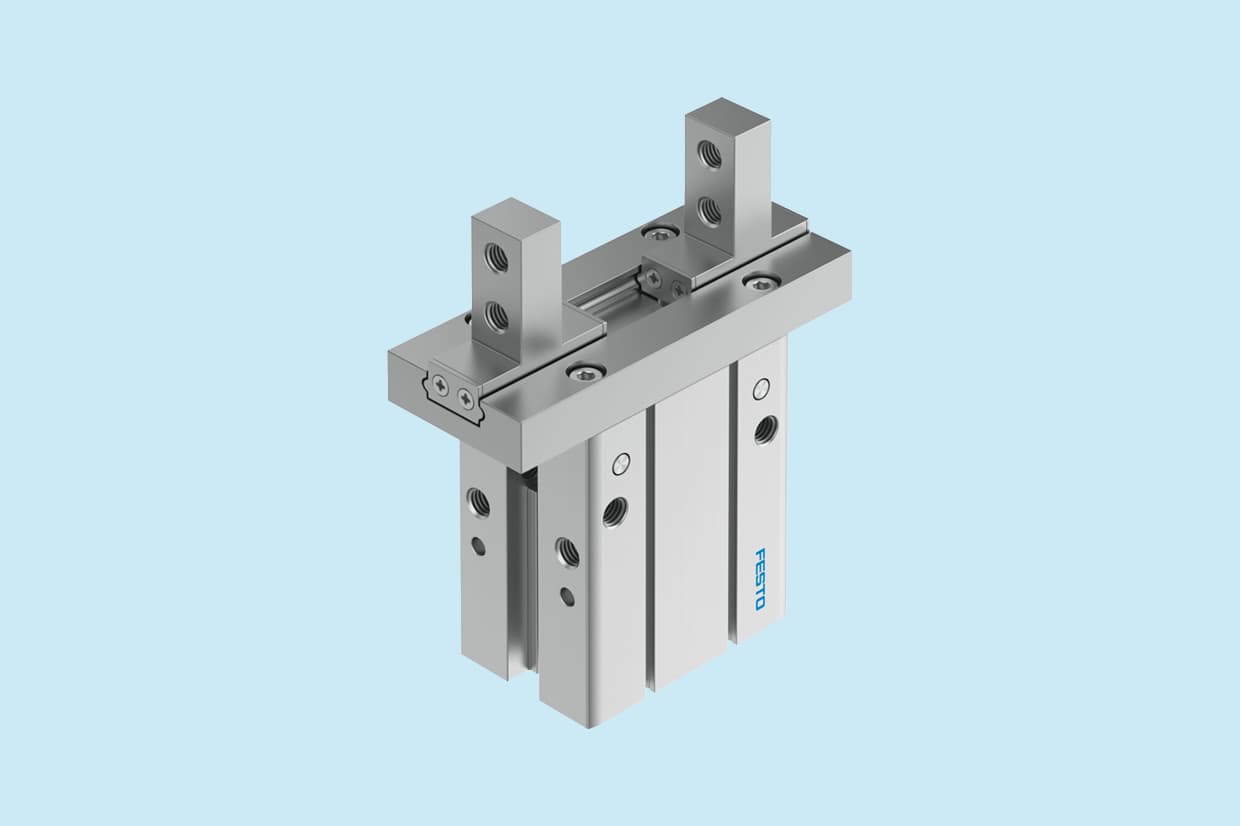
Festo Miniature Electric Actuator - Rod 100 mm 20200N 562772 470mm/s
- RS Stock No.:
- 650-567
- Mfr. Part No.:
- EGSK-33-100-6P
- Brand:
- Festo


Subtotal (1 unit)*
£1,098.70
(exc. VAT)
£1,318.44
(inc. VAT)
FREE delivery for orders over £60.00
Stocked by manufacturer
- Ready to ship from 09 November 2026
Need more? Click ‘Check delivery dates’ to find extra stock and lead times.
Units | Per unit |
|---|---|
| 1 + | £1,098.70 |
*price indicative
- RS Stock No.:
- 650-567
- Mfr. Part No.:
- EGSK-33-100-6P
- Brand:
- Festo
Specifications
Technical Reference
Legislation and Compliance
Product Details
Find similar products by selecting one or more attributes.
Select all | Attribute | Value |
|---|---|---|
| Brand | Festo | |
| Product Type | Miniature Electric Actuator - Rod | |
| Stroke Length | 100mm | |
| Maximum Load | 20200N | |
| Maximum Speed | 470mm/s | |
| Series | EGSK | |
| Maximum Force | 2469N | |
| IP Rating | IP10 | |
| Spindle Type | Ball Screw Drive | |
| Minimum Operating Temperature | 0°C | |
| Maximum Operating Temperature | 40°C | |
| Weight | 2.01kg | |
| Standards/Approvals | VDMA24364 zone III, RoHS | |
| Model Number | 562772 | |
| Select all | ||
|---|---|---|
Brand Festo | ||
Product Type Miniature Electric Actuator - Rod | ||
Stroke Length 100mm | ||
Maximum Load 20200N | ||
Maximum Speed 470mm/s | ||
Series EGSK | ||
Maximum Force 2469N | ||
IP Rating IP10 | ||
Spindle Type Ball Screw Drive | ||
Minimum Operating Temperature 0°C | ||
Maximum Operating Temperature 40°C | ||
Weight 2.01kg | ||
Standards/Approvals VDMA24364 zone III, RoHS | ||
Model Number 562772 | ||
- COO (Country of Origin):
- JP
Festo EGSK Series Miniature Electric Actuator - Rod, 150N Max. Feed Force Fx, 100mm Working Stroke - EGSK-33-100-6P, Numeric Part Number:562772
This miniature electric actuator rod provides Compact linear motion for automation and mechanical integration. Designed for applications requiring a short, precise stroke, it operates within controlled temperature ranges and meets industry approval standards for use in specified zones. Its construction includes a ball-screw drive to convert rotary input into smooth linear output.
Features and Benefits:
• Maximum force 2469 N delivers strong push/pull performance
• Stroke length 100mm enables precise short-travel positioning
• Maximum speed 470 mm/s supports high-speed actuation
• Operates between 0–40 °C for controlled-environment deployment
• Complies with RoHS and VDMA24364 zone III for specified installations
• Compact mass 2010 g eases integration into tight assemblies
• Stroke length 100mm enables precise short-travel positioning
• Maximum speed 470 mm/s supports high-speed actuation
• Operates between 0–40 °C for controlled-environment deployment
• Complies with RoHS and VDMA24364 zone III for specified installations
• Compact mass 2010 g eases integration into tight assemblies
Applications
• Suitable for pick-and-place systems requiring Rapid linear travel
• Ideal for valve or damper positioning in automated plants
• Used with small conveyors to provide short linear indexing
• Can be used for test rigs needing repeatable stroke cycles
• Used for small-scale machine tools requiring rod actuation
• Ideal for valve or damper positioning in automated plants
• Used with small conveyors to provide short linear indexing
• Can be used for test rigs needing repeatable stroke cycles
• Used for small-scale machine tools requiring rod actuation
What load capacities can the device handle in axial applications?
The actuator supports a maximum load of 20 200 N, making it capable of withstanding substantial static or reaction forces in axial arrangements.
How is motion transmitted within the unit to achieve linear output?
Motion conversion is achieved via a ball-screw drive, which translates rotary input into consistent linear displacement with reduced backlash.
What environmental protection level does the unit have?
The enclosure has an IP10 rating, indicating protection against access to hazardous parts but limited protection against ingress of solids or liquids.
What is the device mass and how does that affect mounting considerations?
The unit weighs 2010 g, which should be included when calculating moving mass and support-structure stiffness for dynamic systems.

Related links
- Festo Miniature Electric Actuator - Rod 300 mm 20200N 562774 470mm/s
- Festo Miniature Electric Actuator - Rod 200 mm 20200N 562773 470mm/s
- Festo Miniature Electric Actuator - Rod 600 mm 20200N 562777 470mm/s
- Festo Miniature Electric Actuator - Rod 500 mm 20200N 562776 470mm/s
- Festo Miniature Electric Actuator - Rod 400 mm 20200N 562775 470mm/s
- Festo Miniature Electric Actuator - Rod 300 mm 20200N 562780 790mm/s
- Festo Miniature Electric Actuator - Rod 500 mm 20200N 562782 790mm/s
- Festo Miniature Electric Actuator - Rod 400 mm 20200N 562781 790mm/s