Counter ICs
A counter IC (integrated circuit) are electronic devices that are designed for counting externally input clock pulses.
How does a counter IC work?
This IC operates by reading the counter data output via the I2C-bus serial interface from a microcontroller or another system. It has a configuration of a 24-bit binary-up counter and can count from 0 to 24 bit and also operates at a ultra-low current consumption in comparison to that of a event counter in a microcontroller.
Types of Counter ICs
Counter ICs have a range of different types of configurations such as;
Shift registers - Shift registers are a sequential logic device made up of a cascade of flip-flops, through which a sequence of bits are ’shifted’. These devices are commonly used to convert between serial and parallel interfaces.
Clock Generator - Clock Generators produces a clock signal for use in synchronizing a circuit's operation.
Dividers - Dividers also known as clock dividers provide an output clock signal that is a divided frequency of the input.
There are also various types of counter types such as BCD, Binary, Decade, Divide by N and Octal.
Applications of Counter ICs
Counter ICs are widely used in an array of applications such as;
- Frequency counters
- Digital clocks
- ADCs (Analog to digital converters)
- Time measurement
927 Products showing for Counter ICs
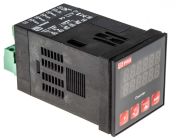 In Stock
Subtotal (1 unit) £85.05(exc. VAT) £85.05/unit |
 In Stock
Subtotal (1 unit) £96.04(exc. VAT) £96.04/unit |
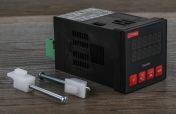 In Stock
Subtotal (1 unit) £105.51(exc. VAT) £105.51/unit |
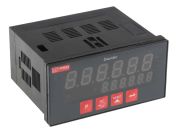 In Stock
Subtotal (1 unit) £114.76(exc. VAT) £114.76/unit |
 In Stock
Subtotal (1 unit) £35.56(exc. VAT) £35.56/unit |
 In Stock
Subtotal (1 unit) £28.54(exc. VAT) £28.54/unit |
 In Stock
Subtotal (1 unit) £89.18(exc. VAT) £89.18/unit |
 In Stock
Subtotal (1 unit) £14.35(exc. VAT) £14.35/unit |
 In Stock
Subtotal (1 unit) £41.93(exc. VAT) £41.93/unit |
 In Stock
Subtotal (1 unit) £103.07(exc. VAT) £103.07/unit |
 In Stock
Subtotal (1 unit) £8.53(exc. VAT) £8.53/unit |
 In Stock
Subtotal (1 unit) £34.32(exc. VAT) £34.32/unit |
 In Stock
Subtotal (1 unit) £34.32(exc. VAT) £34.32/unit |
 In Stock
Subtotal (1 unit) £114.49(exc. VAT) £114.49/unit |
 In Stock
Subtotal (1 unit) £28.54(exc. VAT) £28.54/unit |
 In Stock
Subtotal (1 unit) £8.98(exc. VAT) £8.98/unit |
 In Stock
Subtotal (1 unit) £34.32(exc. VAT) £34.32/unit |
 In Stock
Subtotal (1 unit) £7.07(exc. VAT) £7.07/unit |
 In Stock
Subtotal (1 unit) £34.32(exc. VAT) £34.32/unit |
 In Stock
Subtotal (1 unit) £135.69(exc. VAT) £135.69/unit |

Popular Searches
Related links
- Texas Instruments CD4017BE 5 Through Hole Decade Counter CMOS 16 PDIP
- Texas Instruments CD4029BM 4-stage Surface Mount Binary/Decade Counter, 16-Pin SOIC
- onsemi MC14029BDR2G 4-stage Surface Mount Binary/Decade Counter CMOS, 16-Pin SOIC
- onsemi MC14029BDG 4-stage Surface Mount Binary/Decade Counter CMOS, 16-Pin SOIC
- Counters
- Texas Instruments SN74LS90N 4 Through Hole Decade Counter LS 14 PDIP
- Texas Instruments 5 Through Hole Decade Counter 4000 16 PDIP
- Texas Instruments, Counter 6V
Be the first to know about our latest products and offers
Email address
The personal information you provide to us when signing up to this mailing list will be processed in line with the Privacy Policy