ABB SN201 MCB, 1P+N, 16A Curve C, 230V AC, 6 kA Breaking Capacity
- RS Stock No.:
- 183-3734
- Mfr. Part No.:
- 2CSS255102R0164
- Brand:
- ABB

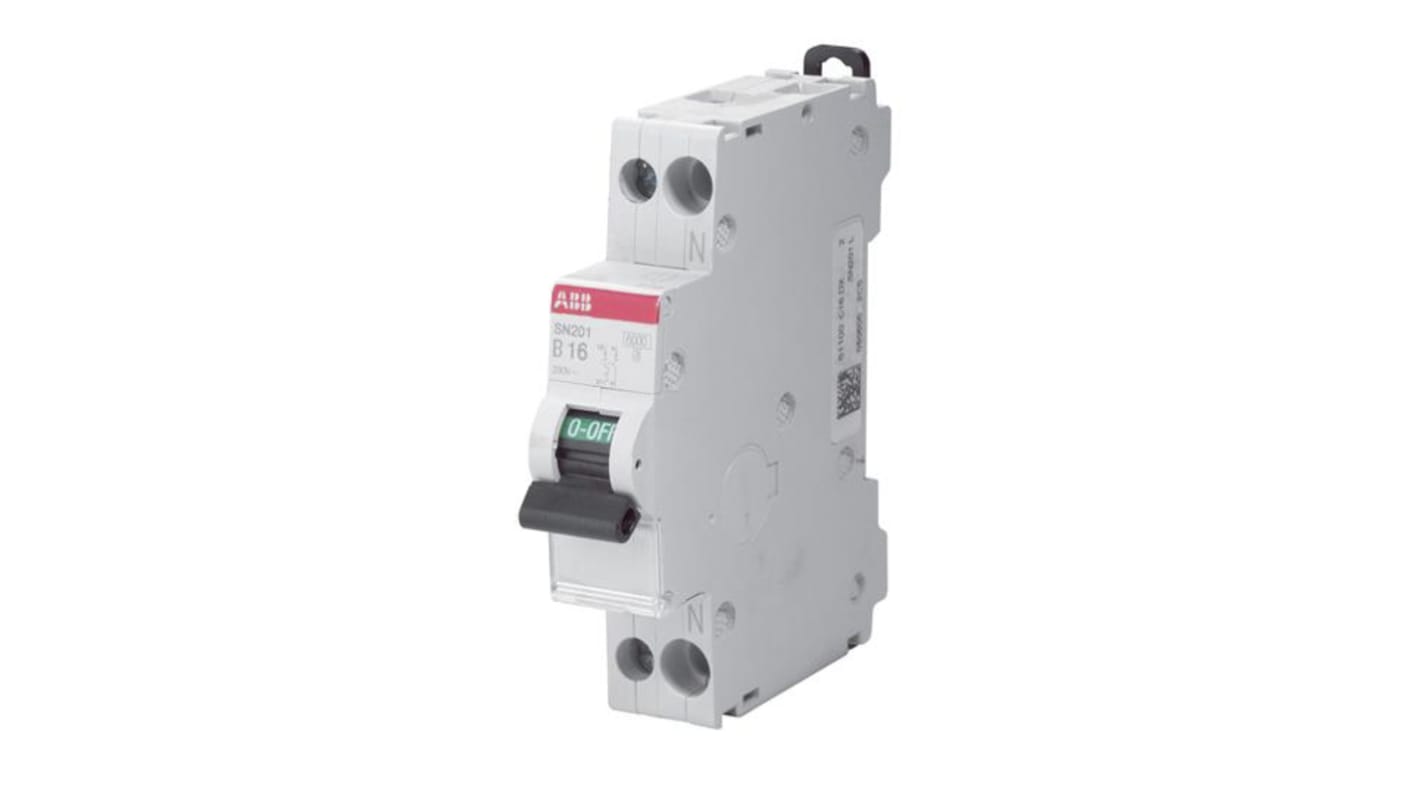
Unavailable
RS will no longer stock this product.
- RS Stock No.:
- 183-3734
- Mfr. Part No.:
- 2CSS255102R0164
- Brand:
- ABB
Specifications
Technical Reference
Legislation and Compliance
Product Details
Find similar products by selecting one or more attributes.
Select all | Attribute | Value |
|---|---|---|
| Brand | ABB | |
| Number of Poles | 1P+N | |
| Current Rating | 16A | |
| Tripping Characteristics | Type C | |
| Rated AC Voltage | 230V | |
| Breaking Capacity at Maximum Voltage Rating | 6 kA | |
| Series | SN201 | |
| Circuit Breaker Type | MCB | |
| Length | 18mm | |
| Width | 69mm | |
| Mounting Style | DIN Rail Mount | |
| Depth | 85mm | |
| Model Number | SN201-C16-L | |
| Terminal Contact Type | Screw | |
| Select all | ||
|---|---|---|
Brand ABB | ||
Number of Poles 1P+N | ||
Current Rating 16A | ||
Tripping Characteristics Type C | ||
Rated AC Voltage 230V | ||
Breaking Capacity at Maximum Voltage Rating 6 kA | ||
Series SN201 | ||
Circuit Breaker Type MCB | ||
Length 18mm | ||
Width 69mm | ||
Mounting Style DIN Rail Mount | ||
Depth 85mm | ||
Model Number SN201-C16-L | ||
Terminal Contact Type Screw | ||
- COO (Country of Origin):
- IT
ABB SN201 Series MCB, 16A Current Rating , 1+N Number of Poles - 2CSS255102R0164 SN201 C16-L
This MCB is an essential component in electrical systems, designed for efficient circuit protection. With a current rating of 16 A and a tripping characteristic of Type C, it ensures reliable operation in various applications. It features a Compact design with dimensions of 18mm width and 69mm length, making it Ideal for DIN rail mounting. The unit operates effectively at a rated AC voltage of 230 V and possesses a breaking capacity of 6 kA, providing robust protection against electrical faults.
Features & Benefits
• Provides exceptional short circuit protection for electrical safety
• Offers a Type C tripping characteristic suited for inductive loads
• Designed as a 1 Plus N circuit breaker for enhanced functionality
• Easily mounts on a DIN rail for streamlined installation
• Equipped with a toggle switch reset for user friendly operation
• Features screw Terminal contacts for secure connections
• Offers a Type C tripping characteristic suited for inductive loads
• Designed as a 1 Plus N circuit breaker for enhanced functionality
• Easily mounts on a DIN rail for streamlined installation
• Equipped with a toggle switch reset for user friendly operation
• Features screw Terminal contacts for secure connections
Applications
• Used for protecting residential and commercial lighting circuits
• Employed in HVAC systems to safeguard critical components
• Ideal for motor requiring reliable circuit protection
• Utilised in control panels for industrial automation systems
• Suitable for use in various electrical distribution boards
• Employed in HVAC systems to safeguard critical components
• Ideal for motor requiring reliable circuit protection
• Utilised in control panels for industrial automation systems
• Suitable for use in various electrical distribution boards
What specific fault responses can be expected from this device?
This device features a Type C tripping characteristic, which allows it to trip at higher overload currents, suitable for inductive loads, ensuring protection during short circuits or equipment faults.
How does the DIN rail mount benefit installation and maintenance?
The DIN rail mount simplifies the installation process, allowing for quick and easy placement within distribution boards and enabling straightforward access for maintenance or replacement tasks.
What type of loads is this circuit breaker best suited for?
This circuit breaker is well-suited for circuits with inductive loads, such as motors and transformers, thanks to its Type C tripping characteristics that handle inrush currents effectively.
What safety measures should be considered during installation?
Ensure that the circuit is powered off before installation, use appropriate tools for securing Terminal connections, and verify compatibility with existing electrical systems to prevent overloading.