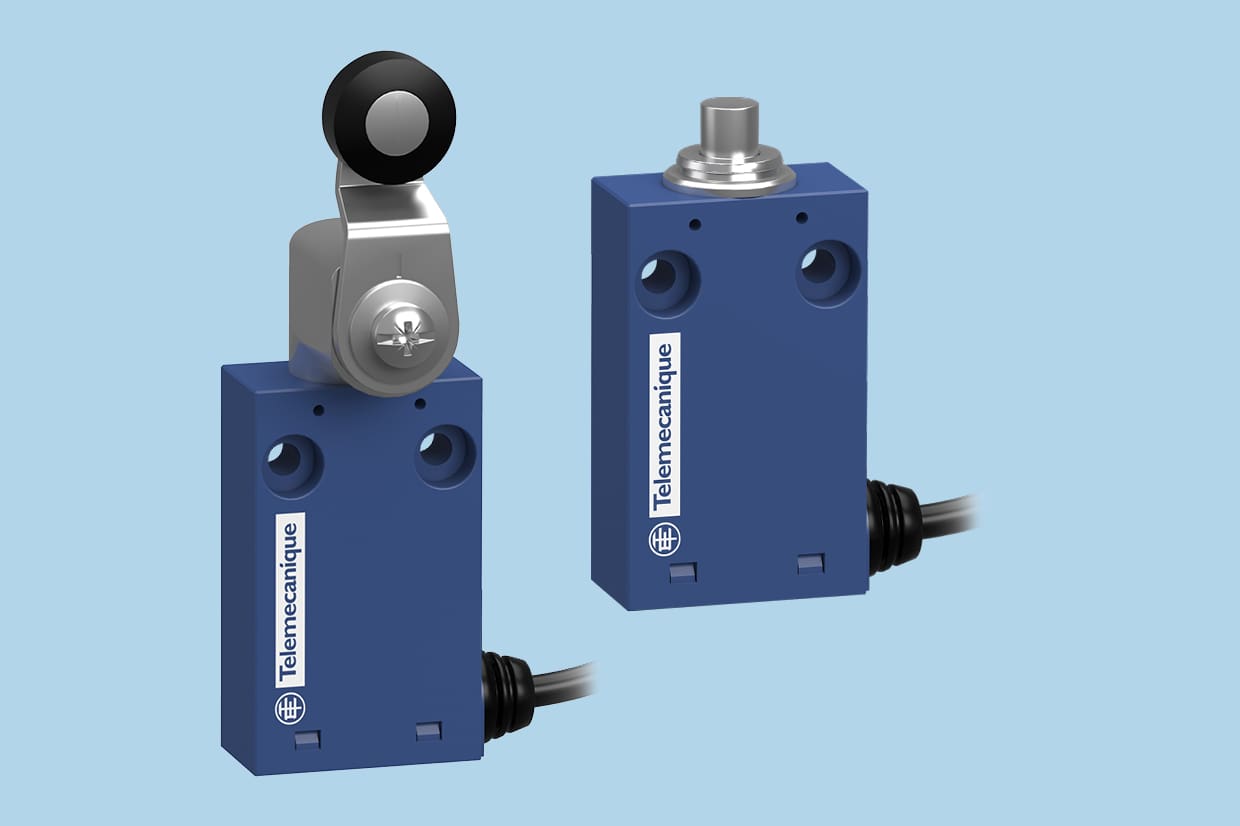
Telemecanique Sensors OsiSense XC Series Cats Whisker Limit Switch, 1 CO, IP68, IP67, IP66, Zinc Alloy Housing, 240V ac,
- RS Stock No.:
- 814-7784
- Mfr. Part No.:
- XCMD2106M12
- Brand:
- Telemecanique Sensors


Subtotal (1 unit)*
£88.90
(exc. VAT)
£106.68
(inc. VAT)
FREE delivery for orders over £60.00
In Stock
- 3 unit(s) ready to ship from another location
- Plus 7 unit(s) shipping from 13 November 2026
Need more? Click ‘Check delivery dates’ to find extra stock and lead times.
Units | Per unit |
|---|---|
| 1 + | £88.90 |
*price indicative

- RS Stock No.:
- 814-7784
- Mfr. Part No.:
- XCMD2106M12
- Brand:
- Telemecanique Sensors
Specifications
Technical Reference
Legislation and Compliance
Product Details
Find similar products by selecting one or more attributes.
Select all | Attribute | Value |
|---|---|---|
| Brand | Telemecanique Sensors | |
| Product Type | Limit Switch | |
| Actuator Type | Cats Whisker | |
| Contact Configuration | 1 CO | |
| IP Rating | IP68, IP67, IP66 | |
| Housing Material | Zinc Alloy | |
| Contact Type | Snap Action | |
| Terminal Type | M12 | |
| Switching Current | 1.5A | |
| Series | OsiSense XC | |
| Minimum Operating Temperature | -25°C | |
| Switching DC Voltage | 250V dc | |
| Switching AC Voltage | 240V ac | |
| Maximum Operating Temperature | 70°C | |
| Length | 50mm | |
| Width | 30mm | |
| Depth | 16mm | |
| Standards/Approvals | CCC, CE, CSA, EN, IEC, UL, RoHS | |
| Hazardous Area Certification | No | |
| Operating Force | 35N | |
| Mechanical Life | 1000000Operations | |
| Mounting Orientation | Multi Directional | |
| Select all | ||
|---|---|---|
Brand Telemecanique Sensors | ||
Product Type Limit Switch | ||
Actuator Type Cats Whisker | ||
Contact Configuration 1 CO | ||
IP Rating IP68, IP67, IP66 | ||
Housing Material Zinc Alloy | ||
Contact Type Snap Action | ||
Terminal Type M12 | ||
Switching Current 1.5A | ||
Series OsiSense XC | ||
Minimum Operating Temperature -25°C | ||
Switching DC Voltage 250V dc | ||
Switching AC Voltage 240V ac | ||
Maximum Operating Temperature 70°C | ||
Length 50mm | ||
Width 30mm | ||
Depth 16mm | ||
Standards/Approvals CCC, CE, CSA, EN, IEC, UL, RoHS | ||
Hazardous Area Certification No | ||
Operating Force 35N | ||
Mechanical Life 1000000Operations | ||
Mounting Orientation Multi Directional | ||
RoHS Status: Exempt
- COO (Country of Origin):
- ID
Telemecanique Limit Switches
Introducing Telemecanique miniature range of limit switches and accessories. These Telemecanique limit switches are the perfect solution for a multitude of applications including escalators, electrical assembly equipment and material handling. A limit switch is commonly made up of an actuator head, switch body and receptacle and predominantly used as part of a control system within industrial applications such as those listed before. Comprised of reinforced UL-VO thermoplastic which offers double insulation and protection of IP66.
How does a limit switch work?
The limit switches function through a contact proximity sensor device that features an actuator that is mechanically linked to a set of output contacts. When an object comes into contact with the actuator, the device then operates the contacts to make or break the electrical connection.
Related links
- Telemecanique Sensors OsiSense XC Series Cats Whisker Limit Switch IP66 240V ac, 3A
- Telemecanique Sensors OsiSense XC Series Cats Whisker Limit Switch IP66 Zinc Alloy Housing
- Telemecanique Sensors OsiSense ATEX D Series Cats Whisker Limit Switch IP66 Zinc Alloy Housing, 240V
- Telemecanique Sensors XCMD Series Cats Whisker Limit Switch IP68 IP66 240V ac, 1.5A
- Telemecanique Sensors OsiSense XC Series Cats Whisker Limit Switch IP67 Plastic Housing 10A
- Telemecanique Sensors OsiSense XC Series Cats Whisker Limit Switch IP67 Plastic Housing 3A
- Telemecanique Sensors OsiSense XC Series Cats Whisker Limit Switch IP66 Plastic Housing 3A
- Telemecanique Sensors OsiSense XC Series Roller Lever Limit Switch IP66 240V ac