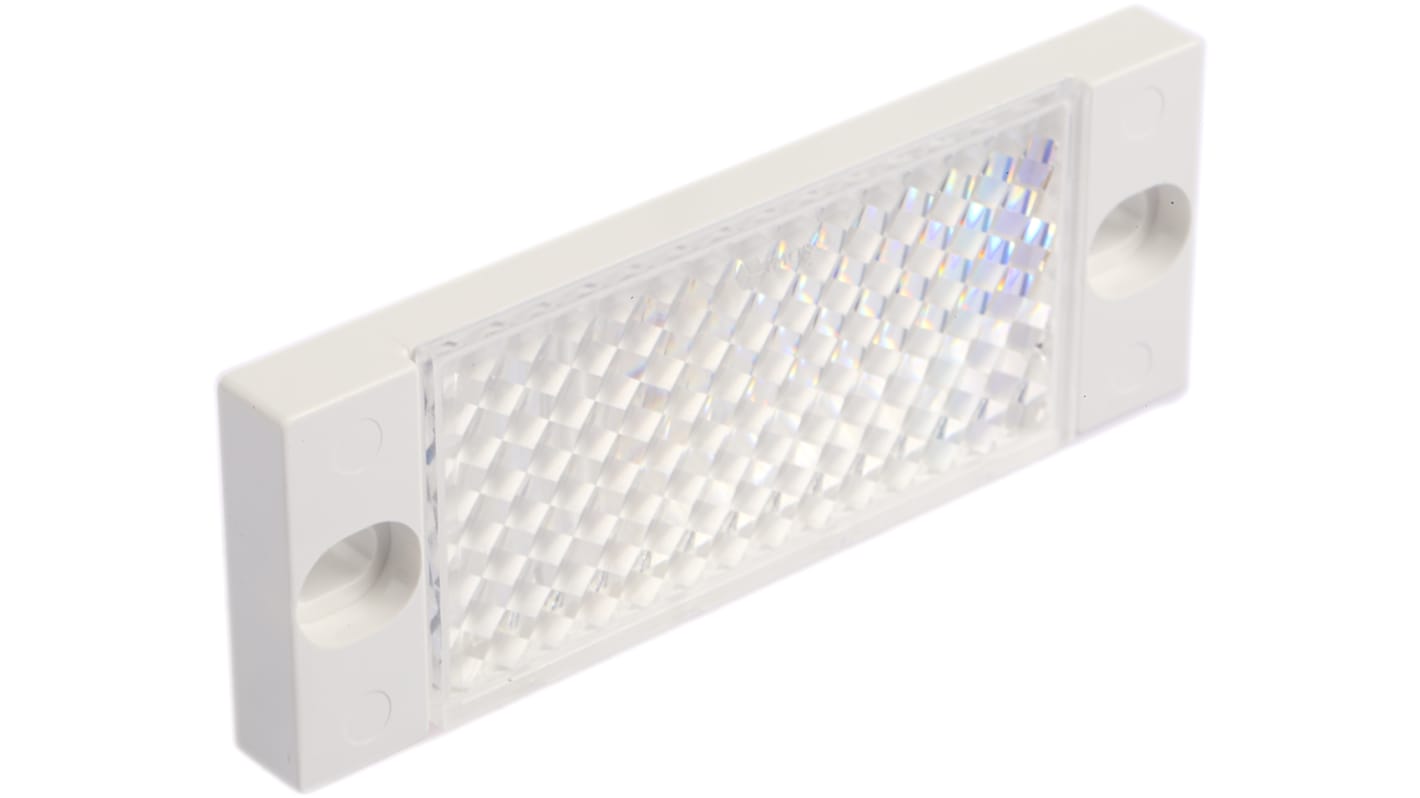
SICK for Use with Retroreflective Sensors
- RS Stock No.:
- 265-2760
- Distrelec Article No.:
- 137-59-034
- Mfr. Part No.:
- PL30A
- Brand:
- SICK
Subtotal (1 unit)*
£20.64
(exc. VAT)
£24.77
(inc. VAT)
Stock information currently inaccessible - Please check back later
Units | Per unit |
|---|---|
| 1 + | £20.64 |
*price indicative
- RS Stock No.:
- 265-2760
- Distrelec Article No.:
- 137-59-034
- Mfr. Part No.:
- PL30A
- Brand:
- SICK
Specifications
Technical Reference
Legislation and Compliance
Product Details
Find similar products by selecting one or more attributes.
Select all | Attribute | Value |
|---|---|---|
| Brand | SICK | |
| Product Type | Sensor Reflector | |
| For Use With | Retroreflective Sensors | |
| Standards/Approvals | No | |
| Select all | ||
|---|---|---|
Brand SICK | ||
Product Type Sensor Reflector | ||
For Use With Retroreflective Sensors | ||
Standards/Approvals No | ||
RoHS Status: Exempt
- COO (Country of Origin):
- DE
SICK Sensor Reflector, -20°C Minimum Temperature, +65°C Maximum Temperature - PL30A
This sensor reflector is a Durable accessory designed for retroreflective sensors. It features a rectangular shape crafted from PMMA and ABS materials, ensuring reliability in various conditions. With a screw-on mounting type, it operates effectively within a temperature range of -20°C to +65°C. The reflective area measures 56mm x 28mm, providing optimal performance for industrial applications.
Features & Benefits
• Rectangular shape optimises functionality for retroreflective applications
• Screw-on installation provides straightforward and secure mounting
• Designed specifically for use with retroreflective sensors to enhance detection
• Compact size allows for versatile placement in various industrial setups
• Screw-on installation provides straightforward and secure mounting
• Designed specifically for use with retroreflective sensors to enhance detection
• Compact size allows for versatile placement in various industrial setups
Applications
• Ideal for mounting on industrial machinery for precise sensor operation
• Utilised in automation systems to improve accuracy in object detection
• Used for enhancing signalling in conveyor systems to optimise workflow
• Suitable for various mechanical installations requiring robust reflective capabilities
• Utilised in automation systems to improve accuracy in object detection
• Used for enhancing signalling in conveyor systems to optimise workflow
• Suitable for various mechanical installations requiring robust reflective capabilities
How is the screw-on design beneficial for installation?
The screw-on design allows for a secure and stable attachment, ensuring the reflector remains in position even under vibrational stresses typical in industrial environments. This reliability contributes to consistent sensor performance.
What materials are used, and why are they important?
The use of PMMA and ABS materials provides excellent durability and resilience, making the reflector suitable for both indoor and outdoor applications. Their stability under different temperature conditions enhances the reflector's overall efficiency.
Can the installation height affect the performance of the reflector?
Yes, installation height can significantly impact the reflector's operational efficiency. Proper positioning ensures optimal interaction with the sensor, which is essential for accurate detection and signalling.
What maintenance is required to keep the reflector in good condition?
Regular inspections to ensure the reflector is free from dust or obstructions are recommended. Cleaning with a mild detergent and soft cloth will maintain its reflective properties and overall functionality.
Related links
- SICK Sensor Reflector for Use with Retroreflective Sensors
- Baumer Reflector for use with Retroreflective Sensors, 3.5 mm Width
- Pepperl + Fuchs Sensor Reflector for Use with Photoelectric Sensors
- ifm electronic Sensor Reflector for Use with Retro Reflective Sensors
- Omron Sensor Reflector for Use with E39 Series Photoelectric Sensors
- SICK, PL Series Reflector for Use with Photoelectric Sensor
- Telemecanique Sensors Sensor Reflector for Use with XUJ Photo Electric Sensor
- Telemecanique Sensors Sensor Reflector for Use with Reflex Photo Electric Sensor