- Published 1 Dec 2025
- Last Modified 1 Dec 2025
- 7 min
Automation in Renewable Energy vs Fossil Fuel Operations
Fossil fuel and renewable energy producers rely on automation to reduce costs, improve safety, and generate higher returns. Find out the technology both industries use to develop sites, optimise production, and deliver power more efficiently.

Fossil fuel energy production used to depend on heavy equipment and manual labour. Equipment still plays a vital role in production, but now, machinery, automation, and AI have replaced much of the human input.
Renewable energy has an even greater reliance on automation. Suppliers use automation and AI to control multiple sites remotely.
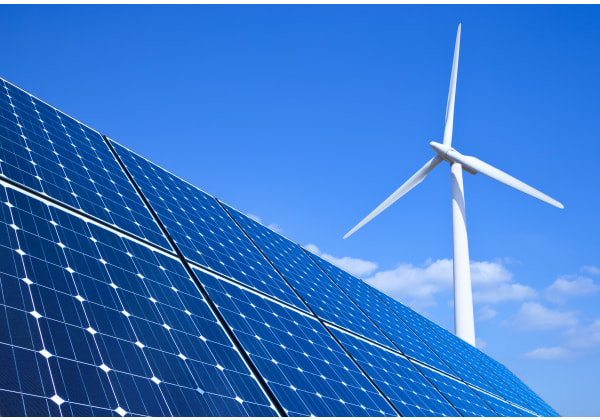
From a single central location, engineers can track performance and set maintenance schedules. They can even turn solar panels to face the sun to capture more light and increase output.
While the technologies differ, fossil fuel and renewable producers use many similar tools. Both rely on tools like remote monitoring systems, digital twins, AI, and drones to reduce risk and improve efficiency.
In this article, find out how much energy production, traditional and renewable, relies on automation, with insights provided by Professor Jacopo Torriti, a Professor of Energy Economics and Policy at the University of Reading. We also look at how automation can improve electricity generation if your company has its own renewable energy system.
How is Fossil Fuel Production Automated?
Fossil fuel companies use AI, robotics, digital process automation, and sensors at every stage of production.
The initial stage, exploration, starts with AI reservoir analysis. A reservoir is a subsurface rock formation that contains quantities of oil or gas.
Machine learning models can predict how much oil and gas is present and how easy it will be to refine. They can also recommend the most efficient way to extract the fuel.
When firms move from exploration to production at a location, they use automated drilling rigs. Powered by AI, they adjust their drilling speed and direction in real time to maximise the efficiency and volume of oil and gas recovery.
To further optimise extraction, oil and gas companies use digital twins, creating virtual replicas of live wells and fields. This allows engineers to test different production scenarios without affecting output.
On-site IoT sensors measure the pressure and flow of oil and gas from wells and pipelines. They also monitor the health of equipment in use at a site. Automated control systems use this data to keep operations running safely and free from interruption.
In hazardous settings, oil and gas firms use industrial robots and remotely operated vehicles (ROVs). These units inspect and repair offshore equipment, reducing the need to send staff into hazardous locations. They also lower maintenance costs and cut inspection times.
For onshore installations, operators use drone technology for pipeline inspections. Automated drones can survey long stretches of piping and detect faults that human patrols often miss.
What are the Benefits of This Technology for Fossil Fuel Production?
The key benefits of automation technology in fossil fuel extraction are:
- Efficiency: Automated machinery and AI help producers make more accurate extraction decisions, reducing permanent and temporary on-site staffing requirements
- Cost savings: As well as reduced labour costs, automated rigs cut production downtime. For instance, this saves ExxonMobil 15% a year in production costs and Shell $4m a year through fewer unplanned offshore breakdowns
- Safety: There is less need for staff to enter hazardous areas, lowering the risk of accidents and the associated costs
What are the Costs of Fossil Fuel Production Automation?
The costs of fossil fuel production are high. While automation reduces the running costs, the upfront investment is still high.
For example, analysts expect the global robotic drilling market to grow 7% per annum between now and 2030 to well over £1bn. The costs of applying robotics to a rig, custom or retrofitted, are significant.
Other upfront costs include IoT devices and installing them on-site. Oil and gas companies also need a sophisticated data infrastructure to process and analyse rig and pipeline data in real time.
Producers spend tens of millions of pounds on finding sites and bringing new wells into production. All of this requires a significant outlay, but automation should recoup that and more over the lifecycle of the investment.
How is Renewable Energy Production Automated?
Renewable energy is less complex to develop and cheaper to produce than fossil fuels. Even so, automation still plays an important role, and it can bring challenges. Prof. Torriti explains, whilst making it clear that these challenges are still worth overcoming:
“The way I see it, the transition does create a bit of pain and disruption. Moving to a cleaner, more efficient energy system inevitably comes with some pain and disruption.
It's a bit like upgrading a city's transportation system; there needs to be disruption, there will be noise and closures, but once it's completed, the city becomes cleaner, faster, and better connected.
When we’re modernising our energy infrastructure, we're laying the foundation for a cleaner, more reliable, more sustainable energy future, and this will come with those disruptions.”
Producers often run multiple sites from remote operating centres. They use programmable logic controllers (PLCs) to manage local equipment, like pumps, panels, and turbines. These units feed data into the producers' supervisory control and data acquisition (SCADA) system.
Operators can see data on the voltage, current, temperature and functionality of on-site assets. That means they can track the performance of solar panels, inverters, and grid connections in real time. They can also use drone technology not only to inspect on-site assets but to clean and maintain them, too.
On some systems, operators can adjust solar PV panels and turbine blades remotely, so they can respond to changing conditions in the field.
Another technology used in both fossil fuel and renewable energy is digital twinning. In the renewables sector, digital twins give engineers live oversight of equipment operation. They can then run tests on the equipment and make adjustments to improve its output without having to touch the physical asset itself.
What are the Benefits of This Technology for Renewable Energy Production?
Renewable energy automation provides these benefits to producers:
- Greater output: Providers can maximise energy yields across changing light and wind conditions. Automation allows solar panels and wind turbines to capture the most energy available
- Lower running costs: Detailed performance data from PLCs helps engineers monitor asset productivity. It also allows engineers to plan predictive maintenance programs for equipment. This extends the life of each asset and avoids small problems escalating into major, and more expensive, repairs
- Grid reliability: Less demand on the National Grid reduces the chances of outages caused by strain on infrastructure. Businesses can also store energy and feed it into the National Grid when it requires extra power
- Improved safety: Renewable energy sources are in much easier-to-reach spots than fossil fuels. However, there are still risky jobs like solar panel cleaning and blade inspections. Drone and PLC equipment can take on much of this work, reducing the time staff spend on manual work in risky conditions
What are the Costs of Renewable Energy Production Automation?
Although still complex, it’s much easier for renewable energy producers to locate viable sites and set up operations than it is for fossil fuels.
The upfront and ongoing costs are also much lower. Automation allows producers to maximise output across multiple sites more efficiently from a central control system.
There are also benefits for businesses that decide to set up their own renewable energy operation. Their energy management system can:
- Control charging and discharging in a linked battery storage system to reduce peak-time electricity use
- Manage automated device trackers on panels and turbines to boost output
- Optimise performance by linking device sensors and controls to a SCADA platform
These extra efficiencies reduce the length of the payback period on an installation. It’s possible to shorten this period further by signing a supply agreement with the Grid to sell the surplus energy, creating an additional source of revenue to pay off the initial investment.
Prof. Torriti discusses how much effort should be expected for these systems, as well as which systems require additional consideration:
“The question is, how much adaptation does a single business have to undertake for everything to be ready? It depends on how old the building is, or where the business operates, and how many of the loads need to be automated. There’s lighting and HVAC, which are typically easier to do than freezers, fridges, and the like.
Depending on what the business does, what type of loads they have, they might need to do a bigger job, or need more of an efficiency improvement, than just installing the smart part of the kit.“
However, Prof. Torrito also elaborates on how tools like AI can help with these efforts:
“Now you have an algorithm that controls some of the process, because that's done quickly, redoing the system so that it's compatible with such a smart system. However, if the building is really old and nothing has been done to it for a while, it might take months, years to get it compatible.”
Fossil fuel operators face higher upfront automation costs. Renewable energy operators face lower barriers to entry and generate faster returns. Both use automation to improve efficiency, reliability, and staff safety in hazardous environments.
Check our range of automation and control gear to use on your next project.

Professor Jacopo Torriti is a Professor of Energy Economics and Policy at the University of Reading. He is the Flexibility Theme Lead of the Energy Demand Research Centre (EDRC), serves as a member of the Panel of Technical Experts of the Department for Energy Security and Net Zero, DSO Performance panel, and the Strategic Advisory Team on Energy and Decarbonisation for the Engineering and Physical Sciences Research Council (EPSRC).
Prof. Torriti has authored several books, including ‘Appraising the Economics of Smart Meters’ (2020), ‘Energy Fables’ (2019), and ‘Peak Energy Demand and Demand Side Response’ (2015).