- Jack Portley
- Published 9 Sept 2026
- Last Modified 29 Oct 2026
- 6 min

Top 6 Rail Technology Innovations


The world’s first steam-powered, interurban railway transporting both passengers and goods opened just over 200 years ago, linking Manchester and Liverpool in the UK. In the years since, the rail industry has seen many new innovations in rail technology, such as automatic signalling, electrified railways, automatic half barriers, and warning systems, which have led to it being what it is today. Nowadays, trains are one of the most common transport options available and are usually the most suitable means of travelling between cities. In 2021, passengers travelled around 473 billion km on European railways.
Why Does the Railway Industry Need to Innovate?
Despite its popularity, the railway industry is still not perfect and can be improved in a variety of ways. One of the main priorities for engineers and designers in the rail industry is speed, which can always be improved upon when better technology is developed. This is especially important when passenger demand for trains is high, as they can be more effective at transporting a larger number of people. Faster trains can also directly compete with air travel, meaning lower emission levels.
The EU has a mission to be carbon-neutral by 2050, and the railway industry has a part to play in helping the EU achieve this goal. Some technologies support the use of electrified railways, which would significantly lower the emissions produced by conventional trains. Another aspect improved by better technology is safety, as the risk of human error can be replaced by adopting automatic processes instead.
Over the years, we’ve seen lots of innovations that have aimed to tackle these issues. Some have been successful, and some haven’t. Take a look below at the 6 best rail technology innovations right now.
Train Innovations
High-Speed Rail
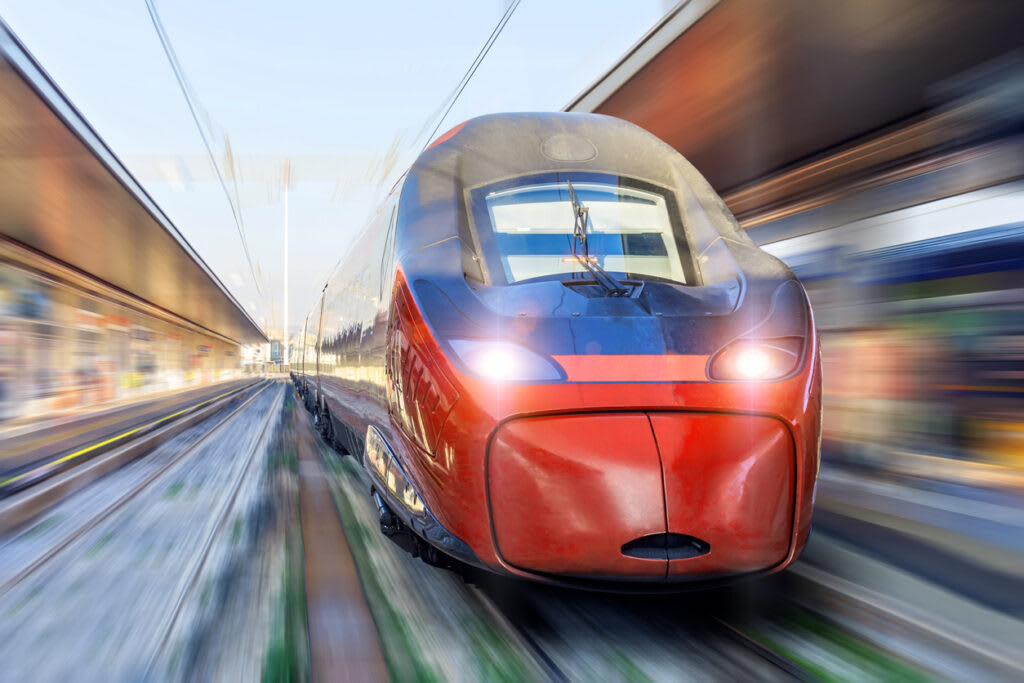
High-speed rail is the fastest way to travel between major cities. Some high-speed trains, such as the Shinkansen (bullet train) in Japan and TGV in France, are capable of reaching speeds of up to 320 kilometres per hour. It meets the increasing demand for faster and better travel from A to B and around urban areas, reducing congestion and improving mobility. At such speeds, these kinds of trains offer competition to air travel whilst being more energy-efficient.
High-speed trains are only currently in operation in 16 countries around the globe. Most countries have dedicated tracks and routes for high-speed rail, however, they can also operate on conventional tracks at reduced speeds. Roof-mounted pantographs and overhead supply lines generate the power to drive the trains, which often have two synchronised engines on either side.
Maglev Trains
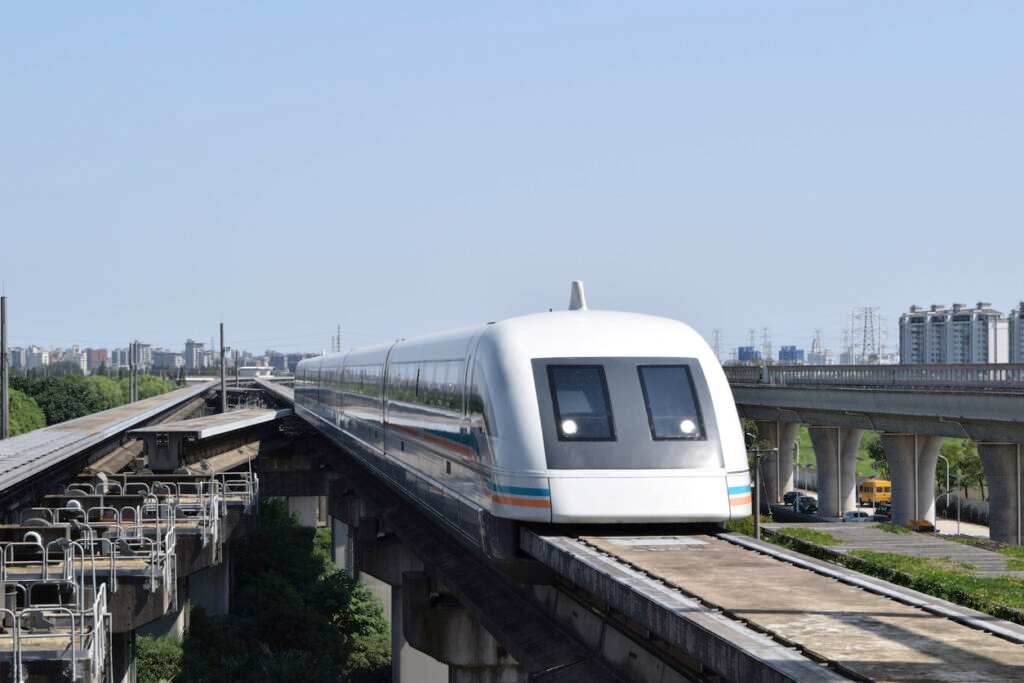
Maglev, short for magnetic levitation, refers to trains that levitate around 10cm above the ground. Unlike traditional rail technology, maglev trains don’t have wheels and instead use electromagnetic forces to lift the train above the tracks. The magnets used for maglev trains are superconducting, meaning that when they’re cooled to -450℉, they’re able to generate magnetic fields ten times stronger than regular electromagnets, which allows them to lift and drive the train forward. This means that there isn’t any friction involved with these types of trains, allowing them to travel at incredible speeds. In fact, the fastest a maglev train has travelled is 603km/h.
It’s not just the high speeds that make maglev trains so appealing. Electronic propulsion systems reduce the use of fossil fuels for power and limit emissions. With the absence of friction on the tracks, maglev trains generally require less energy to maintain speed, and the regenerative braking system reuses energy that would be lost in conventional trains. Without the need for contact, it also means that less maintenance work needs to be carried out on the guideway and trains, as the risk of wear and tear on components is significantly decreased.
Hyperloop: The Future of Rail Technology?
The concept of Hyperloop technology was first introduced in the 18th century by British inventor George Medhurst. Since then, engineers and researchers have been exploring similar concepts. It was later picked up by billionaire Elon Musk in 2013, with his own take on the idea for his Hyperloop Alpha project. In 2021, the global hyperloop market was worth 1.2 billion US dollars and is expected to reach 6.6 billion US dollars by the end of 2026, at a compound annual growth rate of 40.4% in those five years.
What is Hyperloop Technology?
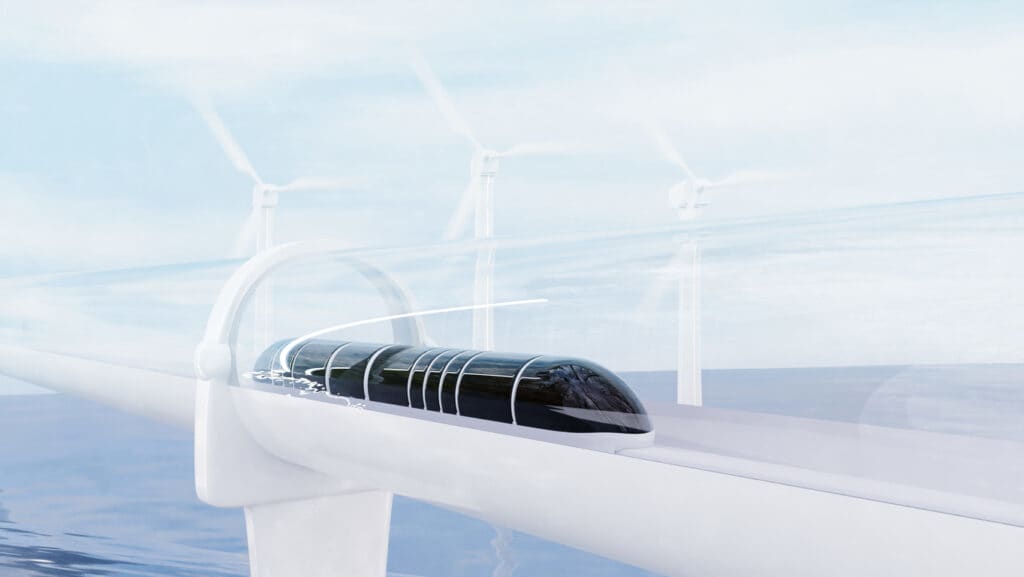
Hyperloop enables high-speed transportation by using low-pressure tubes to transport pods. The pods travel through vacuums, which almost eliminate air resistance, allowing for incredibly high speeds of up to 1,100km/h. The pods will be transported using the aforementioned magnetic levitation technology. This means that although passengers will travel at a rapid speed, they should still enjoy a comfortable and quiet journey. In addition, with fully electric and energy-efficient operations, Hyperloop is a sustainable form of transport, and one that could be key to Europe’s plans to become climate-neutral by 2050.
At the moment, many companies are actively testing and developing Hyperloop technology. However, we are still at least 7-8 years away from hyperloop rail technology being ready. Europe’s only Hyperloop test location is in Munich, Germany, called the TUM Hyperloop. It feels like a long time before we will see this futuristic-looking technology in action, but when it does start transporting passengers, it might become the new norm.
Automatic Train Operators (ATOs)
ATO systems refer to technology that allows trains to operate with little-to-no human intervention. The systems use a combination of sensors, computers, and communication platforms to control train speed, acceleration, and braking. ATOs contribute to a safer railway network by minimising the risk of human error, as they can maintain safe distances from other trains and prevent collisions with precise control of train speed. They’re also more energy-efficient as they optimise energy consumption and reduce waste, whilst also incorporating regenerative braking systems.
AR and VR
Augmented reality (AR) and virtual reality (VR) can be used to offer immersive and effective training solutions for rail staff. The result is a realistic environment that gives drivers, train managers, and maintenance workers the experience of a real-life situation which can be done in their own time. AR and VR can also be used in the design and planning of new networks, tracks, and infrastructure, or modifications to existing networks, as rail engineers and planners can utilise them to better visualise and evaluate proposed designs. Leveraging digital models to showcase ideas gives stakeholders or investors a better picture of what the end product will look like.
Positive Train Control (PTC)
PTC is an advanced safety system that works on automation principles. By monitoring trains in real-time using GPS technology, PTC systems improve safety by automatically intervening if unsafe conditions that could lead to collisions are detected or predicted. With all information collected in a centralised control centre, PTC systems can monitor and control train speeds based on a variety of factors such as conditions, track curves, and gradients. If a train exceeds speed, the system can automatically apply the brakes or signal audible or visual warnings to the driver.

Jack is an SEO Content Specialist at RS. He studied Journalism at University of Central Lancashire, specialising in Print Journalism. During the course he gained experience in working for major national organisations, such as The Independent and BBC. His interests include digitalisation and technology trends. In his spare time, Jack likes to play football, learn languages and attend live music events.