- Justyna Matuszak
- Published 8 Sept 2026
- Last Modified 29 Oct 2026
- 7 min

Low-Carbon Future of Travel – Airships


Could helium blimps be a solution to climate problems? Today's airships are a sustainable mode of transport that generate less carbon per person than aeroplanes, while also being less cramped, noisy, and uncomfortable.
Some people might recognise airships, or rather Zeppelins, from history - but their era ended. Nowadays, airships significantly differ from the ones that existed over 80 years ago. Advanced technology is bringing a new opportunity for blimps to be an eco-friendly, safe, and fast way of travelling. Furthermore, the new air balloons have the potential to change aviation.
The Comeback of Airships
Air pollution and carbon emissions produced by aeroplanes are key contributors to climate change. However, the world without air transport doesn’t seem real anymore. This is why companies search for alternatives that will be safe for both the environment and for passengers. One of the machines tackling this challenge is the airship.
Even though this mode of transport might seem new for some people, the history of airships started in 1783. In that year, two brothers from France designed a hot-air balloon. Then, in 1900, Ferdinand Zeppelin, a German military officer, invented the rigid airship and named it by his surname. In 1937, one of the Zeppelins, called Hindenburg, caught fire and fell to the ground, claiming the lives of 35 passengers and crew.
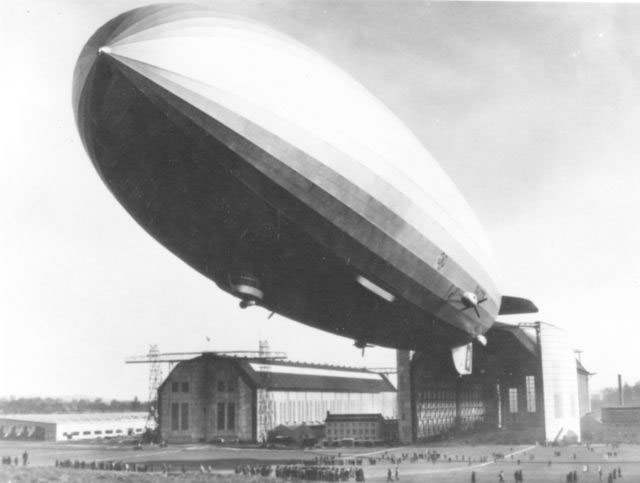
Since that catastrophe, airships were shelved. As a result, in today’s world, they are possible to see only in fantasy books or movies, or on adverts. However, reality will soon bring airships to life once more. One of the first production models of the massive Airlander airship will be the first to travel to the North Pole since 1928.
Greener Way to Travel
In 2019, planes consumed 18.27 billion gallons of fuel. That's not even close to being carbon-neutral. To feel less guilty about flying, airships are the solution. They use much less fuel than conventional aircraft thanks to the lifting power of helium. If the future brings this mode of transport for commercial flights, travelling will be easier and the Earth's air cleaner.
The new helium blimps are powered by a hybrid of combustion and electric engines. In comparison to aircraft, the hybrid electric-powered vehicle offers a 90% carbon emission reduction. However, many companies want to design fully electric airships by 2030 and offer zero-emissions flights.
Blimps offer a luxury cruise through clouds with almost zero noise. They are capable of carrying up to 20 passengers, but the new airships will be able to ferry up to 100 passengers. That means, there are plans for airships to travel commercially. With the ability to take off and land almost everywhere, they are a big competitor for aeroplanes.
Airlander 10
Airlander 10 is a new airship designed by Hybrid Air Vehicles (HAV), founded in 2007 by British airship pioneer Roger Munk. HAV’s flying blimp is a hybrid-electric prototype with floor-to-ceiling windows for incredible views and natural light. The company is currently aiming for service starting from 2028.
Tom Grundy, HAV’s chief executive, stated that the Airlander is not a ‘luxury product’, but a practical solution to challenges posed by climate change. Grundy added that it could make connections like aeroplanes. This enables travel between cities that are 230 miles (370 km) apart, while generating only 10% of the carbon emissions of conventional aircraft today. With plans to transition to fully electric propulsion, airships could become an even more sustainable transport option in the future.
The Design Behind Airships
The way that airships are built is putting this mode of transport above aircraft. They are safer for the environment and more convenient modes of transport. Besides that, airships don’t require special infrastructure. They can take off and land without a runway. Improved Zeppelins can land closer to cities.
Airlander is a customisable, low-emission commercial aircraft with its hybrid and electric configuration. The Airlander is also quite small which doesn’t make it a perfect air vehicle for heavy lifting. Despite that, it's improved with helium, that in combination with other technologies, allows for keeping a large payload for a long time (max. 10-ton).
Besides Airlander, there is France-based LCA60T, called a ‘Flying Whale’. It's a big airship in the shape of a blue whale, that can collect and drop cargo without landing. The uniquely designed airship can save risk and cost while ensuring the project's success. It is 150 metres long with a 66-ton payload. With its hi-tech skin, electric engines, and advanced ultracapacitors, it can carry objects of any size and cruise around 62 miles per hour.
Why Airships May Be the Future of Air Travel
A lot of engineers work on electric cars as alternatives to fossil fuels, but the transformation towards a low-carbon future has to happen on the land and in the air. New airships are not only limited to travel and tourism purposes, but are also a perfect solution for cargo companies as they can access anywhere without the need for infrastructure on the ground.

Airlanders don't consume a lot of energy and are extremely efficient with their simple design. New helium blimps can easily transport large liquid hydrogen tanks. Airships can be used for a variety of missions, including humanitarian disasters, natural resource extraction, and large cargo transport. It's also possible that airships will become more widely accessible.
FAQs

Justyna is a Digital Content Writer at RS, responsible for writing and managing content. She studied Journalism and Social Communication with a specialisation in social media and e-PR. In that time, she participated in journalist internships in Wroclaw (PL) and London. She is passionate about tech innovations, the shift to a digital world and the impact technology has on our lives. Her interests are sport, music and film photography.