- Justyna Matuszak
- Published 9 Sept 2026
- Last Modified 29 Oct 2026
- 7 min

8 Technology Trends Transforming the Maritime Industry


Technology is in almost every sphere of human life; it is also present in the shipping industry. The smart ship and autonomous technologies are just a few examples of developments used in the modern marine sector.
Improvements in shipbuilding (megaships), advanced materials, smart shipping, propulsion, robotics, big data, and sensors are making the work on Earth's waters easier. Companies and ship engineers should be aware of these technologies to improve their workforce.
With tech progression, the marine sector can be safer for the environment and still determine the global market's escalation.
Current Trends for Shipping and Logistics
According to Economist Impact, in addition to facilitating more than 80% of global trade, the marine sector also accounts for 3% of greenhouse gas emissions. Technology is transforming the maritime industry, helping to improve operational efficiency while reducing environmental impact. Advanced technologies support more effective sea-space strategy and maritime traffic management. Shipping technology, including smart fleet operations and autonomous vessels, are reshaping maritime management, creating new opportunities while also introducing new challenges for the industry.
“To sustain resilience against future challenges, especially climate change, the sector must not only accelerate decarbonisation but also enhance port efficiency and adopt new technologies, focusing on the needs of developing economies.”
UN Trade and Development (UNCTAD), Review of Maritime Transport 2023
1. Artificial Intelligence
Artificial Intelligence (AI) has the potential to end repetitive tasks and improve the quality of the shipping industry. One example of an AI-driven sector is logistics. Artificial intelligence helps with route optimisation, safety, decision-making, and automation. Above all, AI also helps distribute goods between hundreds of vessels passing through ports and avoids traffic.
As per Gitnux, 90% of newly built ships will have AI capabilities by 2030. A third of marine companies have already begun experimenting with AI and ML.
“It is predicted that, by 2040, AI applications will affect almost every aspect of life. Aside from profit—one study finds that early adopters of AI in the transport and logistics sector enjoyed profit margins higher than 5%—its potential in driving efficiency and achieving sustainability goals will be a key driver of AI adoption in the future.”
Economist Impact, Global Maritime Trends 2050
2. Sensor Technology
Sensor technology is one of the most advanced and well-developed technologies, especially popular in industries connected to transportation. Sensor technology replaces many manual tasks, like examining equipment aboard ships.
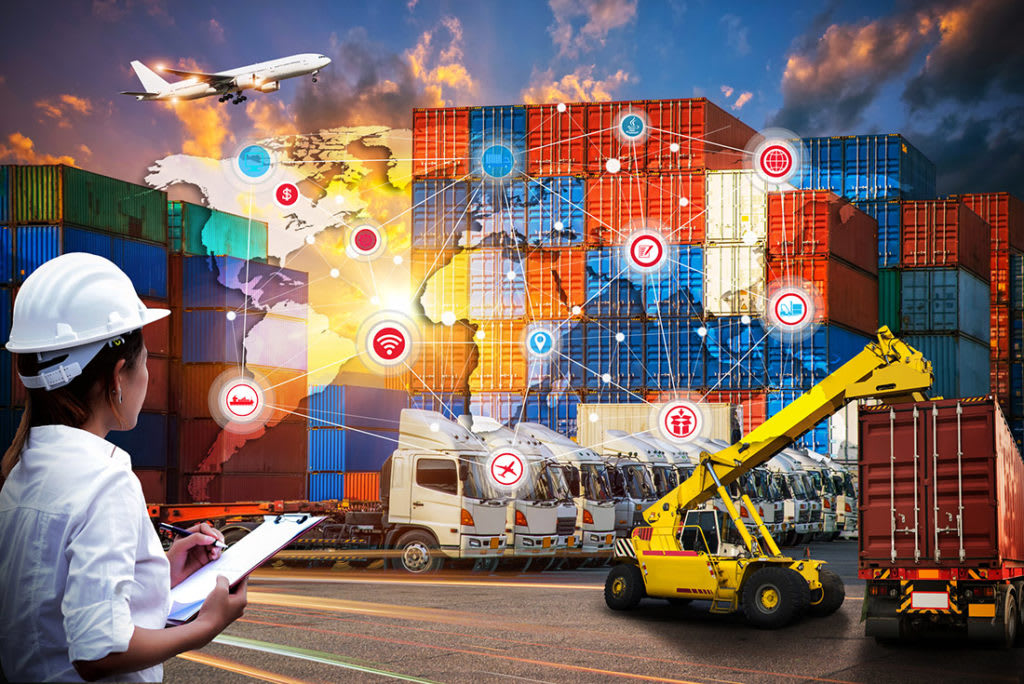
Connecting all machinery to sensors helps marines and ship technicians manage their equipment more efficiently. It also allows them to detect problems at an early stage and identify their cause. By remotely analysing the data, companies monitor the functioning status of machines. In result, they can analyse the maintenance necessary at regular intervals and their total operability aboard ships.
Sensors can connect with machine learning and AI. This means they may link to remote facilities and analyse data, sending out alerts if any ship components need maintenance. Calibrated correctly, sensor technology can help with ship efficiency.
3. Robotics and Cybersecurity
Advanced robotics are improving many industries, including maritime. Industrial robots are already used in the security, maintenance, and inspection of vessels. They can do tasks, such as packing, delivering, inspection, and even firefighting. Robots can also help in risky environments where human life is in danger by providing autonomous navigation and rotating the ship. In times where ships are often monitored remotely, it's crucial that the maritime industry invests in cybersecurity to safeguard confidential information, guard against cargo theft, and stop operations-threatening intrusions.
Some robotics work with sensors to identify and record all the data on the ship and analyse it. Besides robots, there are drones that help the maritime industry with search and rescue. They can deliver goods to vessels and help with remote inspections, security and surveillance. In the future, robotic automation may replace manpower in some sectors but in others it will be more about collaboration between man and robot (cobots).
4. Automation and Autonomous Control
On land, autonomous technology helps make decisions based on the route, including detecting other cars, pedestrians, and traffic signals, and securing the car to remain on the road. Automation in shipping helps to deliver products without interference. Autonomous systems operate with high efficiency, allowing for the detection of materials with advanced heat mapping, eliminating human error possibilities.
Smart technologies help vessels stay on course without requiring constant input from the captain. Thanks to real-time route information, action can be implemented immediately in case of issues.
4. Big Data and IoT
Data analytics checks the information from large operation systems such as ships and ports. Predictive analytics about container types, weight, and destination, as well as ship data (trim, stability, engine performance, and communication) are used to make data-driven decisions for the safe and efficient operation of ships.

Big data on ships can reveal historic container trends and ocean conditions. The ship responds to various changing weather conditions. Analysing different parameters can help improve efficiency and overall performance.
The Internet of Things (IoT) also enables control of some objects - even remotely. It works with a GPS and cloud-based database, which stores all the data collected by devices on the ship. IoT can connect all the other devices and shipments like robots through wireless networks.
“The maritime IoT market was forecasted to grow at a compound annual growth rate (CAGR) of 6.2% between 2020 and 2027. […] This growth can be achieved on the back of improving connectivity at sea through the use of lower Earth orbit satellites and 5G capabilities to enable higher data rates and security. There will be an expected 30.9 billion IoT units in 2025, up from 13.8 billion in 2021.”
Economist Impact, Global Maritime Trends 2050
6. Augmented Reality
Augmented reality (AR) is present in lots of industries today. As a key technological advancement, AR is mainly used by seafarers. However, some maritime training institutes have also started using it. Thanks to AR technology, marine students can experience real-life scenarios.

AR also helps with efficient maintenance and vessel inspections. Plenty of maintenance tasks can be done with the help of guidance software and tools which allow image visualisation. There is no need for technician help.
AR is also present in the shipbuilding and design process. It simulates virtual projects and helps resolve some technical issues. It lets people imagine an idea before its implementation.
7. Ship Propulsion Systems
New ship propulsion systems not only provide better control of the ship, but also help the ecosystem, as wind, solar, and nuclear propulsion systems are the most widely employed propulsion systems on ships. These pure, carbon-free, renewable energy sources release no emissions, or are recyclable.
The adoption of smart technology in propulsion systems enables precise, automated control and decision-making. This technology provides captains and marine engineers with continuous, real-time monitoring of the operational status and performance of marine diesel engines. The software shows and ensures that they always remain within acceptable operating regions.
8. Advanced Materials and 3D Printing
Ships have an unfavourable impact on the environment. Fuel, oil spills, and waste effluents cause an increase in pollution and environmental damage. This is why investment in alternative energy management solutions is important. It can help reduce the emissions of greenhouse gases such as carbon and sulphur.
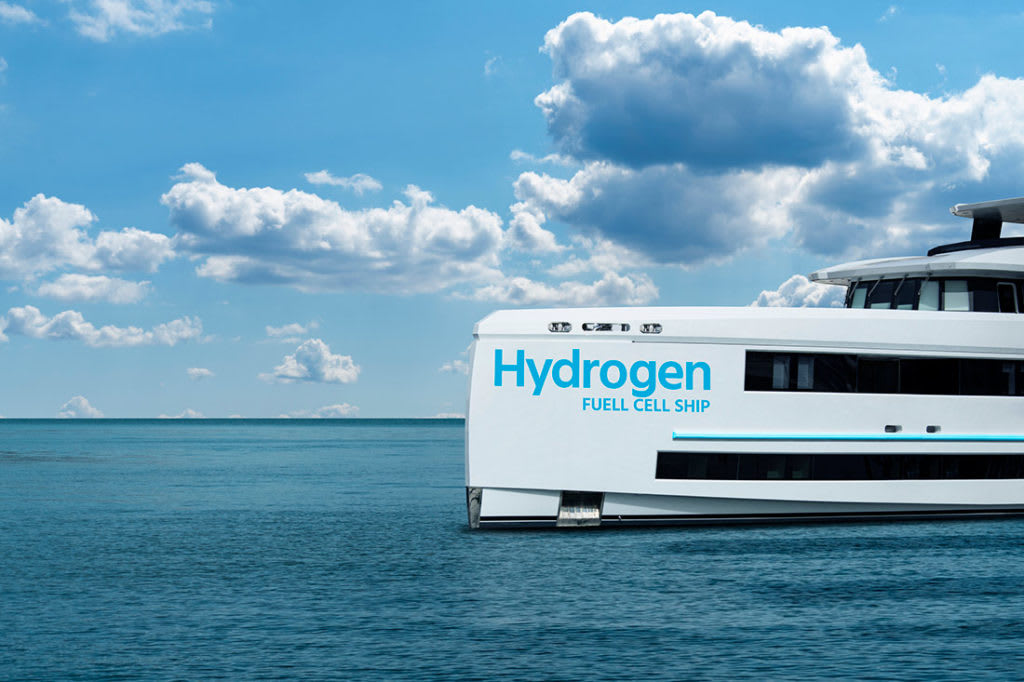
Since maritime is a big concern, it's crucial to move toward a green approach. Therefore, many new sea modes of transportation, such as zero-emission ships, are being developed to reduce the maritime industry's carbon footprint. Many megaships are built from different, more sustainable materials, like fibre-reinforced plastic. It helps to reduce traffic and carbon, but also carries large quantities of cargo.
3D printing is another technology that is becoming popular in the transportation industry and enhances shipping as it aids in the timely availability of spare parts onboard ships. It can also be used to design and construct new parts. Additionally, 3D designs and virtual models enable visualisation and remote monitoring by connecting ships to their virtual counterparts.
What is the Future of the Maritime Industry?
All the shipping trends mentioned above are just a few examples of how technology influences the maritime industry. To ensure trade services are efficient, ships and shipping companies need to focus on new advancements. Shipping technologies have a big impact on commercial shipping, especially in regard to vessel design and operation.
Integrating smart ship development increases efficiency and research, and technology trends in the maritime sector help to reduce greenhouse gas emissions. They also provide alternatives to fossil fuels – fuel cell boats. At the moment, they are the most common energy source used in ships.
In conclusion, technology will lead the future of the maritime industry by improving maritime safety and ensuring that ships are more sustainable and operate more efficiently.

Justyna is a Digital Content Writer at RS, responsible for writing and managing content. She studied Journalism and Social Communication with a specialisation in social media and e-PR. In that time, she participated in journalist internships in Wroclaw (PL) and London. She is passionate about tech innovations, the shift to a digital world and the impact technology has on our lives. Her interests are sport, music and film photography.