- Published 9 Sept 2026
- Last Modified 9 Sept 2026
- 6 min
The Wearable Tech Revolutionising Hypertension Management


High blood pressure (or hypertension) affects an estimated 1.4 billion people worldwide, according to the World Health Organisation, and is one of the largest public health epidemics in the word. This is hugely concerning as having high blood pressure significantly increases the risk of strokes, heart failure, kidney disease, and diabetes.
This article will consider the challenges with managing hypertension and the wearable technology that is revolutionising this area for patients and the healthcare industry alike.
The Challenge with Monitoring Hypertension
Many different factors can affect a person’s blood pressure, such as food and drink consumption, exercise, stress, and sleep. By making positive lifestyle choices such as eating healthily, exercising regularly, and getting plenty of sleep, those with hypertension can reduce their risk. This is good news for anyone who knows that they have high blood pressure as they can actively take steps to improve their condition. However, a huge challenge with hypertension is that there are often no visible symptoms. As a result, lots of people may suffer with hypertension without realising it. Those who fall into this category may not realise that steps need to be taken to reduce their risk.
Another challenge with monitoring blood pressure is that it can fluctuate throughout the day. Often, taking a single reading of your blood pressure may not provide an accurate picture. Additionally, some people suffer with “white coat hypertension”, which occurs when a patient’s blood pressure is normal at home but increases when being tested by a doctor as a result of being slightly anxious. Patients who measure their blood pressure at home may recognise this change, whilst those who do not may assume that the heightened blood pressure caused by white coat hypertension is typical. Others experience the opposite phenomenon - “masked hypertension” - where a patient’s blood pressure readings are normal at the doctor’s surgery but much higher when taken at home.
How Can We Monitor Hypertension More Effectively?
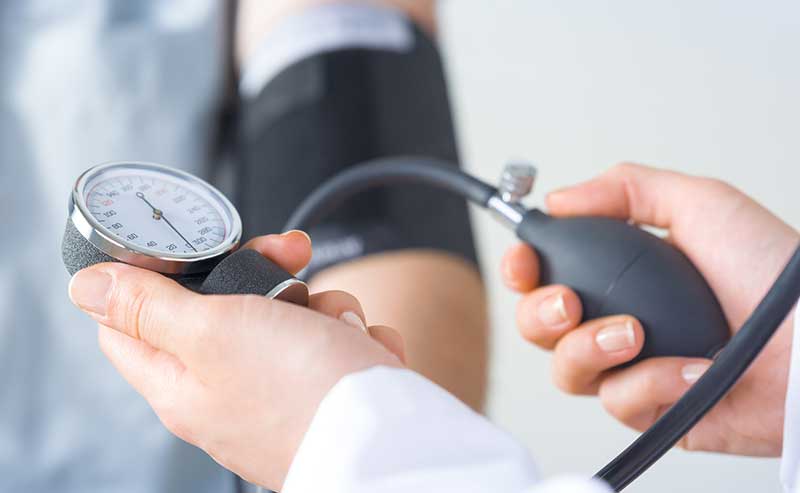
Traditionally, blood pressure is monitored using a cuff device wrapped around the patient’s arm. Using the oscillometric technique, the cuff measures one value (mean arterial pressure), and an algorithm calculates blood pressure readings accordingly.
"Hypertension is the leading risk factor for heart attack and stroke and the Centers for Disease Control & Prevention (CDC) have identified high blood pressure as an underlying health condition that can increase risk of complications with COVID-19. Knowing your blood pressure, monitoring it regularly, and taking action to manage it, are crucial activities to lowering your risks, and it’s easier than ever to do this at home."
Ranndy Kellogg, OMRON Healthcare President and CEO
A more effective way to monitor blood pressure is needed to improve understanding and support healthier lifestyle choices. Accurate, frequent, and consistent readings are therefore key. If blood pressure can be regularly monitored from home at different times throughout the day, a more accurate, holistic view can be understood.
As sensors develop and become more accurate and precise, their inclusion in wearable devices makes it possible to monitor blood pressure effectively. Key sensors for this technology include:

- RS Stock No. 223-6437
- Mfr. Part No. MAX86140ENP+T
Each
£8.80

- RS Stock No. 215-194
- Mfr. Part No. ST1VAFE3BXTR
Each
£2.26

- RS Stock No. 482-419
- Mfr. Part No. S3590-08
Each
£129.07

- RS Stock No. 244-4680
- Mfr. Part No. BP104S
Each (In a Tube of 45)
£0.608
Wearables for Measuring Blood Pressure
Wearable blood pressure monitors have the potential to revolutionise hypertension management. By frequently taking blood pressure measurements with minimal stress or invasion to the patient, wearables can dramatically improve the quality of detection in a number of ways:
- Increasing the number of measurements throughout the day enables better management of blood pressure for those with masked hypertension (where blood pressure is normal at a doctor’s surgery but hypertensive when measured at home) and abnormal blood pressure variability.
- Monitoring environmental conditions allows for a better interpretation of blood pressure data within the context of different situations. This enables patients to determine the daily stressors that affect their blood pressure.
- Improving anticipation medicine to identify increasing risk based on extensive data collected over time.
So, what wearables are there for those wanting to better manage hypertension, and how do they work?
Wearable Ultrasound Patch
"What you measure [with a cuff] is the peripheral blood pressure—your arm, your wrist, your foot. Those measures are meaningful, but they are less meaningful than the measures inside your key organs like your heart, your lungs, your brain, your kidneys."
Sheng Xu, Professor of Nanoengineering at the University of California, San Diego’s Jacobs School of Engineering
To measure blood pressure within a patient’s organs, doctors have traditionally used a complicated method whereby a tiny probe is inserted into a blood vessel and fed all the way through to the relevant organ. With ultrasound patches, it's now possible to obtain these results without requiring such a complex, invasive, and risky procedure.
Softsonics is developing a flexible patch that can be worn on the skin over jugular veins or carotid arteries, enabling continuous readings within deep tissues. This is particularly useful for patients with heart or lung diseases and enables doctors to detect cardiovascular problems more quickly.
Wearable Blood Pressure Wristwatch
Following the example of other common wearables, wristwatches are increasingly being used to measure blood pressure. They enable users to take measurements frequently throughout the day to observe fluctuations and gain greater insight into their heart health.
Tarilian Laser Technologies (TLT) have developed the Sapphire sensor, a wristwatch that can accurately determine beat-to-beat blood pressure using an optical microsensor that is small and comfortable to wear.
"Yet again we are uncovering new capabilities of our optoelectronic blood pressure sensor and the very rich signal that it generates. This new pivotal development further distinguishes the TLT technology from other technologies on the market in that we can further validate potential false positives within the clinical process and avoid the situation where the patient receives unnecessary treatments."
Dr Sandeep Shah, CEO of TLT
Omron have also made huge progress in this area with the creation of a wearable blood pressure monitor that tracks blood pressure fluctuations. It reviews and stores this data to enable wearers to better understand how their lifestyle directly impacts their heart health.
Wearable Pulse Generator Implant
The Moderato implantable pulse generator was developed by Orchestra BioMed to deliver BackBeat Cardiac Neuromodulation Therapy (CNT) to treat hypertension. Whilst drugs have typically been used to treat the condition, BackBeat allows for therapy to be delivered in an innovative way by modulating bioelectronic signals associated with blood pressure control. This implant is particularly revolutionary for high risk patients and those with pacemakers as 70% of pacemaker patients have a high blood pressure.
"BackBeat CNT is an exciting new approach to device-based blood pressure management and has potential to be a primary treatment modality for the more than two-thirds of pacemaker patients at risk from hypertension."
Dr. Karl-Heinz Kuck, MD., Ph.D., Director of Cardiology at the Lans Medicum, Hamburg, Germany
The Future of Blood Pressure Monitoring
Progress is continually being made in the measurement and monitoring of blood pressure. With the aid of mobile devices and voice assistants, we are more equipped to capture information relating to blood pressure and to manage it more effectively. In this way, blood pressure monitoring becomes more of a daily habit providing personalised insights based on contextual data rather than one-off readings.
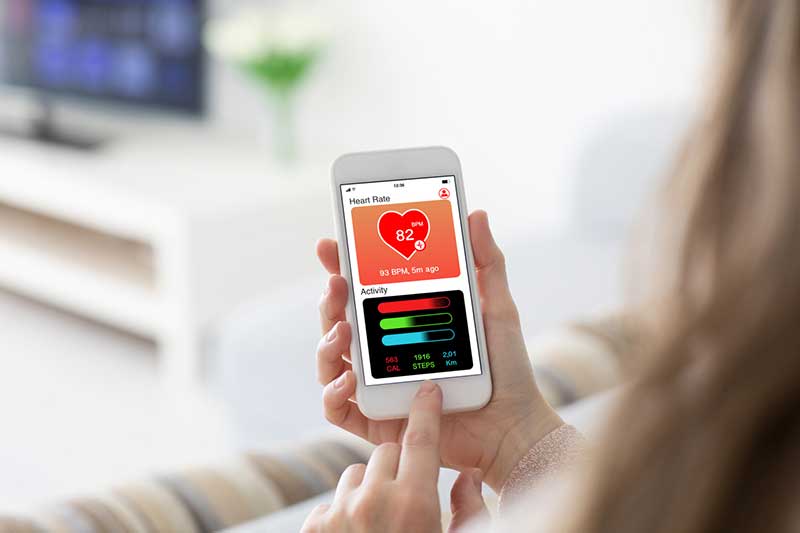
New innovations and developments in this area are continually being tested to ensure accuracy and reliability. For instance, transdermal optical imaging is being tested to measure blood pressure by detecting blood flow changes in facial videos captured via a smartphone. Additionally, smartphone apps are creating a smarter way of storing and analysing this data. Apps can be used to record and display blood pressure values automatically using Bluetooth and some can gather environmental data such as room temperature, and humidity as well as blood pressure to assess the impact of external factors.
There is still a long way to go with this technology, as clinicians are currently unable to continuously measure blood pressure whilst patients sleep or undertake exercise such as running. However, wearable devices that enable users to monitor their blood pressure frequently throughout the day offer a significant development for those managing hypertension.