- Lorna Little
- Published 9 Oct 2026
- Last Modified 6 Nov 2026
- 12 min

DNA Storage Technology: DNA Data Storage
DNA data storage encodes digital files into synthetic DNA for long-term archiving. Find out how it works, the infrastructure it needs, and whether it's a good fit for pharma data preservation.


DNA data storage is a method of turning digital files into synthetic DNA sequences. It uses the chemical behaviour of molecules like DNA and proteins to store, process, and compute data.
When discussing DNA data storage, we spoke to Professor Thomas Heinis, a Professor in Data Management at Imperial College London. He explained computing in DNA in greater detail:
"Computing in DNA is fascinating because it's completely different from the Von Neumann architecture we have in silicon chips. In a standard computer, you move data from storage into memory, and then into the CPU to process it. That data movement is where a huge amount of energy and time is wasted.
“With DNA, you have massive parallelism. In a tiny droplet of liquid, you have trillions of molecules interacting simultaneously... What we look at is: can we do database operations directly in the wet lab?
“You query the data in the molecule itself, and you only sequence the results that match your query. That saves you from having to sequence the whole database to find a single record."
Two of its biggest advantages over conventional portable storage are its high density and durability over the long term. Another is lower operating costs. Data storage doesn't need power-hungry data centres or the constant replacement of ageing storage media.
Despite its promise, there are significant limitations to this branch of biological computing. Its high cost and low write and retrieval speeds mean it's not yet a replacement for everyday storage. But there is genuine potential in research data archiving, where there is infrequent need to access the information.
“I would say synthesis is the biggest issue. Cost and speed; that's really the biggest issue at the moment. That's probably where research should focus to de-risk it.
"We're kind of piggybacking here onto synthesis, DNA synthesis, which was not that old, actually. Chemical synthesis has not been around for that long, and it's only ever used for medical applications or medical research.
“It's a very small market there... They're happy with what they have. They have high precision, high throughput- not high throughput, but they have high precision... And now we're coming with DNA storage, and we're actually needing a lot of it. Just scaling up this capability is a challenge." - Professor Thomas Heinis
This article explains how DNA data storage works and what organisations need in place to implement it.
Data Encoding and Retrieval
There are three parts to the process of encoding and retrieving data from synthetic DNA:
- Encoding: Conversion of the digital files into DNA sequences of adenine (A), thymine (T), guanine (G), and cytosine (C)
- Synthesis: Chemical construction of physical DNA strands and preservation in a stable condition (either dehydration or silica encapsulation)
- Decoding: Return of the stored DNA into its original digital form
Dr Heinis elaborates on this process, touching upon diverging needs with medicine vs data storage:
"I see two challenges. One is really that the demand has never been big enough for them to invest in higher capacity and reduce cost. And then there's also this fault and error tolerance that we have in data storage that medicine doesn't have, which is a little bit of their diverging needs as well.
“Another different need is that medicine needs quite a high yield or high concentration of it, whereas for us, low concentration actually works quite well."
At each stage, correction algorithms detect and fix chemical errors like missing, swapped, or extra bases. Otherwise, these faults would corrupt the retrieved data.
"At the moment, we know sequencing is near perfect, even with ‘not-so-good’ sequencing technology like nanopore. And when I say it's not so good, it's such a high error rate; it's not worse, it's at 1%, which is barely anything. In our experiments so far, and also in the community, we use less error correction than disks, for example, and it's still good.
"If you introduce more error correction, say, Reed-Solomon or LDPC codes, you are adding redundant data, parity bytes, or additional oligos. Every extra base you have to write to encode that error correction costs money and physical volume. If your synthesis is very noisy, say you have a 5% or 10% error rate, you might need 30% or 40% redundancy just to recover your data reliably.
“At that point, the money you thought you saved by using a cheaper, lower-fidelity synthesis method is completely wiped out because you are having to synthesise 40% more strands. There is a sweet spot where the error correction overhead balances against the physical error rate of the synthesis and sequencing channels." - Professor Thomas Heinis
There are signs of development on the problems of write and retrieval speeds. In March 2025, a team at the Technion in Israel published DNAformer. Its researchers claim it significantly speeds up retrieval with improved accuracy.
"For example, there’s content detection. What we look at there is: ‘does my archive contain a specific keyword?’ or something like that. And that works with CRISPR-Cas... and then based on fluorescence, one can do that, right?"
"Basically, you have a lot of pores, and the sequences are being pulled through the pores, and then the change in current in the pore tells you what base is there, basically. And this technology, this adaptive sampling, is: as you pull a strand through, then you look in real time, look at what's coming, and decide, 'I want that' or 'I don't want that'. And if you don't want it, it's just going to be ejected, and then the next strand comes through.
“That can also help you. You can retrieve content selectively out of the archive. So you don't need to sequence everything, basically." - Professor Thomas Heinis
Although that is important, the focus for the technology will be on archival storage for some time to come. Organisations wanting to use the tech now need to build a reliable write, preserve, retrieve, and decode workflow.
Infrastructure Requirements for DNA Data Storage
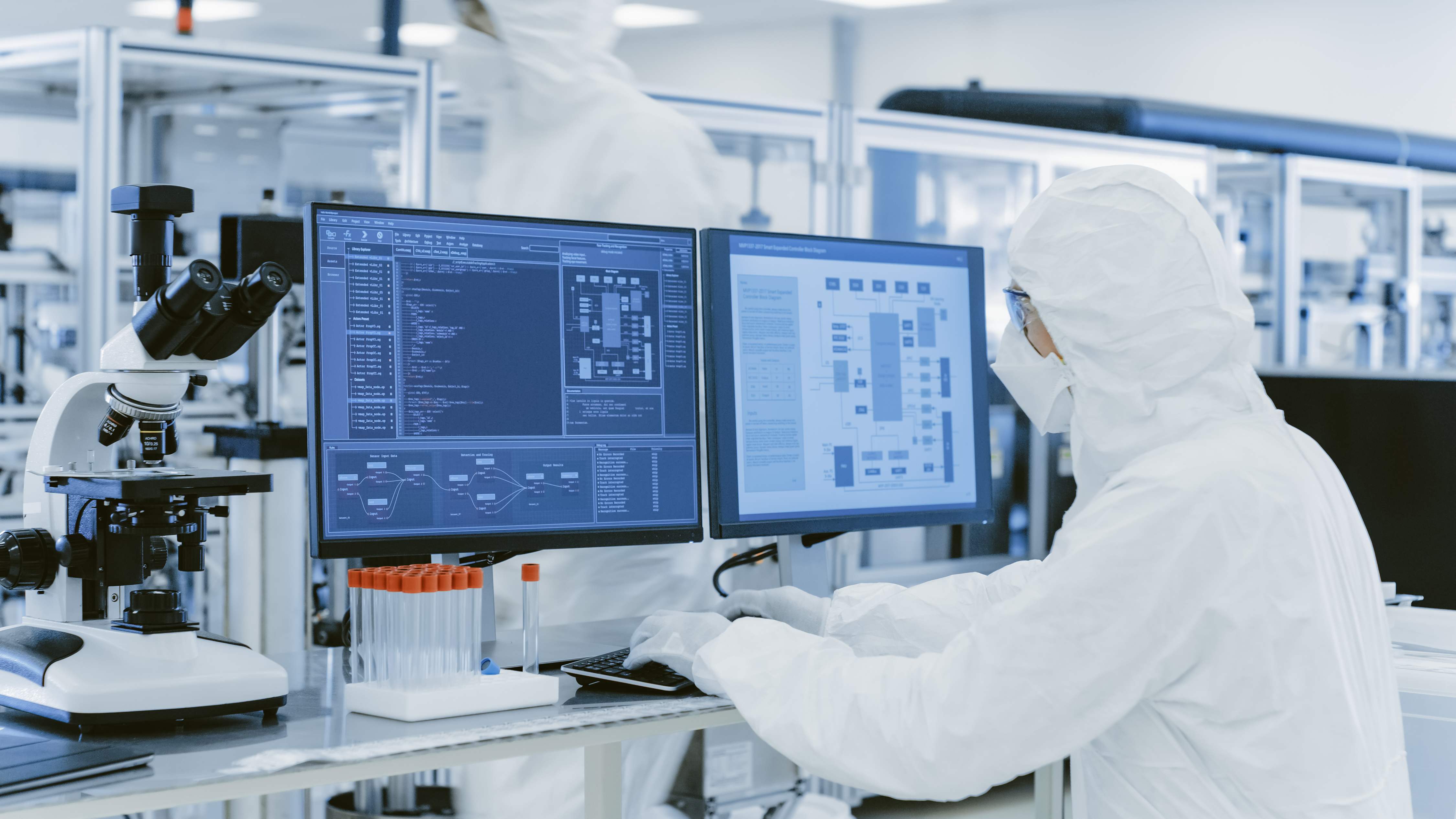
Such is the sensitivity of DNA storage that it depends on tightly controlled conditions at every stage. That applies from writing and synthesis through to preservation and retrieval.
Preservation is the most pressing issue from an infrastructure perspective. DNA degrades with exposure to moisture, temperature fluctuation, UV radiation, and chemical contamination.
Humidity and temperature are the main risks, according to a Nature Communications review on DNA stability. Reliable environmental monitoring is essential. That depends on having strong test and measurement equipment. To spot unwanted deviations in conditions, data logging helps teams track both factors over time.
The equipment demands are also significant. Other DNA storage infrastructure includes:
- Chemical or enzymatic synthesis equipment for writing data to DNA
- Sequencing instruments for reading it back
- Specialist liquid handling and microfluidic equipment for moving tiny volumes of material accurately
- Automation and control systems to reduce errors and keep output consistent
- Regular calibration of instruments to protect the accuracy of every measurement and result
The Fraunhofer BIOSYNTH project aims to build many of these capabilities into a single microchip platform. In 2025, Fraunhofer said their goal was a portable system with built-in monitoring. Such a system could replace the current room-sized synthesis equipment. Dr Heinis elaborates, using a concept known as a ‘microfactory’:
"We had what is called a microfactory. Some folks from a Swiss university built this for watchmaking, so you had a little microfactory; you had different modules, each module would do something, and that was done for watchmaking, right? But the idea here was that we adapt this for DNA storage.
“So, you have one module that does the PCR, you have one module that has a kind of storage, one that does the sequencing, and then you can have a little arm that moves between them and moves the DNA between them. That was the idea, anyway!
“That’s also what it could look like in an automated version in a data centre, or in a data factory."
All of this needs stable, clean power supplies and robust process control. Without both, scaling may cause the synthesis and sequencing to become unreliable.
But hardware is only part of the challenge. Traceability matters too, as organisations need to know:
- Who wrote what?
- When did they write it?
- What were the storage conditions at the time?
Reliable data loggers and measurement tools make this possible. This is important because audit trails are not optional in regulated sectors like pharma.
DNA storage does not plug into standard IT infrastructure yet. That said, the DNA Data Storage Alliance has started to map a path towards commercialisation and standards.
When considering commercialisation and practical applications in server rooms, Professor Heinis elaborates with his own experience:
"How does it fit in a day, specifically in a data centre today? Well, it's a pain, right? I mean, companies like Microsoft have been telling me, 'Oh, we don't want to have anything liquid in the data centre’, which is understandable.
“So, the model I see that could physically pan out is that there are dedicated data centres for this kind of data. This ‘write once’, ‘read occasionally’ or ‘never again’ type of workloads. We send them over there, and there's going to be a couple of technicians or lab technicians and so on taking care of getting this into DNA and back and forth... It's probably going to be separate; it's not going to be a disk that you plug in."
In late 2025, Atlas Data Storage announced the ‘Atlas Eon 100’. The company describes it as the first commercial-scale DNA storage service.
This is an important milestone. However, organisations still need specialised equipment, trained personnel, and purpose-built workflows. This is the minimum requirement to make it work in practice.
"Standards are crucial. Right now, every research group and startup has their own proprietary encoding scheme, file format, primer design, and error correction. If ‘Company A’ writes data today, ‘Company B's sequencer might not be able to decode it 20 years from now unless they know the exact proprietary codec.
“The DNA Data Storage Alliance is doing good work establishing common file formats, metadata standards, and interoperability guidelines.
"To the user, it will just look like an API endpoint; say, an archival tier. You upload a dataset, specify a 30-year retention policy, and accept that retrieval will take 24 to 48 hours. Under the hood, a facility synthesises and stores the DNA, but the end customer interacts with a standard cloud API." - Professor Thomas Heinis
Those best positioned to adopt DNA archiving will be those who think of it as part of their key future infrastructure from the planning stage.
Pharmaceutical Data Management
Pharmaceutical and genomic research generates enormous volumes of data. Typical outputs include sequencing runs, clinical trial records, and regulatory submissions. Organisations often need the ability to interrogate and edit the data soon after production.
We asked: if digital archives aren't always completely static, what happens when data stored in DNA needs to be edited or updated or even overwritten? Professor Heinis replied:
“So, people work on that, right? This is something that is being done. You can change the DNA, and you can also use CRISPR-Cas, which allows you to edit DNA, so we can update DNA like that... The stability also suggests that it should be the primary use case for it, right? It's really painful to edit, let's say."
But after those steps, considerable data must stay on file for extended periods of time. That’s true even though few people may actually need to access it after the initial analysis. A2025 review suggests DNA storage is a viable near-term option for medical cold data, which Professor Heinis agrees with, though stresses it isn’t a catch-all solution:
"I'd say that you have to keep it. You have to keep it for audit purposes, and that's not just pharmaceuticals; banks have to do this as well these days. We've been talking to companies like BP, and they need to store a lot of data for regulatory reasons.
“You’ll have data that you have to store probably for decades; data you will probably never read again... It's stuff you need to run for regulatory reasons, but you're probably never going to access it again.
"Data is data. If you know you're going to need it in a couple of years again, I would probably stick with tape. And if you also want to read it a lot, then probably should stick with tape as well."
The review authors suggested the use of regional DNA storage centres serving multiple hospitals in a region. They also proposed combining DNA storage with other approaches. Those could include next-gen sequencing and polymerase chain reaction (PCR).
The guidance points to building a practical model on established techniques. They warned against relying too much on newer methods that are still in the research phase.
For pharma, the new technology would not have to replace current systems. Instead, the focus should be on how DNA storage complements them, especially for data that might need decades of storage.
Any decision to adopt DNA archiving depends on robust governance and traceability. Pharma already has these strong foundations in both. That could make long-term records, including ESG data management records, an option for early planning and testing.
Long-Term Archival Benefits of DNA Data Storage
The headline benefits of DNA data storage are real and backed up by substantial evidence. Density is the most striking, with a single gram of DNA theoretically capable of holding hundreds of petabytes of data.
Durability is equally important. Recent cassette-style preservation work suggests data could remain stable over centuries. Silica-encapsulation studies suggest even longer periods. Energy demands during storage are near zero, as preserved DNA requires no power to maintain. However, Professor Heinis suggests there’s more to consider:
"People love to say, 'DNA storage uses zero power,' and that is true once the DNA is in the tube. If you encapsulate it in silica or dehydrate it and keep it at room temperature, it sits on a shelf and consumes zero watts. Compared to tape, where you constantly refresh it, run robotic libraries, and migrate data every five to seven years, or hard drives that spin constantly, the operational energy is basically zero."
"However, you have to look at the embodied footprint of synthesis. Chemical synthesis currently uses harsh reagents, solvents, phosphoramidite chemistry, and generates chemical waste... If you store data for two years, DNA is environmentally worse than tape or hard drives because the synthesis footprint dominates.
“However, if you keep that data for 30, 50, or 100 years without ever having to migrate it or power it, the cumulative energy savings of not running a data centre or migrating media eventually outweigh the initial synthesis footprint."
For now, cost is the biggest barrier. In 2021, MIT News reported that writing one petabyte of data in DNA would cost roughly one trillion dollars. Costs have fallen since then as advances in enzymatic synthesis are driving them down. However, the tech is a long way from price parity and write speeds that make it practical at scale.
DNA data storage is not ready for mainstream use, though its infrastructure requirements are worth understanding now. The technology is moving fast, and the organisations that prepare the earliest will benefit the most.
For related insight, explore our environmental test and measurement range. You can also read our data loggers guide and learn more about data integration for biotech and pharma innovation.

Professor Thomas Heinis is a Professor in Data Management in the Department of Computing at Imperial College London, where he leads the SCALE Lab. He earned his MSc and PhD in Computer Science from ETH Zürich, completed a postdoctoral fellowship at EPFL and undertook a Fulbright-funded visit to Purdue University.
His research explores how to manage and analyse large, complex datasets, especially those generated by scientific research. His work spans high-performance data analytics, spatial data indexing, distributed and cloud computing, and new hardware for data processing. He also leads research into DNA-based data storage, exploring how synthetic DNA could be used to store and process digital information.

Lorna is an SEO Content Specialist at RS, where she creates search-led content focused on topics including industrial innovation, engineering, maintenance, and procurement. After studying Creative & Professional Writing at Canterbury Christ Church University, she built her career in SEO and content marketing across both agency and in-house environments, helping readers navigate technical subjects through informative, user-focused content. Outside of work, Lorna enjoys reading, travelling, and making memories with her family.
Related Articles
7 Robotic and AI Applications Transforming Healthcare
Healthcare has always been inherently human – from how we’re cared for to its fundamental battle with mortality – but it is now increasingly embracing the presence of machines. Surgical robots and advanced technology are the main drivers of this transformation.
Read more
Top 10 Healthcare Technology Trends
Do you know all the healthcare technologies that are impacting the healthcare sector and soon will transform the way we cure diseases.
Read more