- Jack Portley
- Published 8 Sept 2026
- Last Modified 23 Oct 2026
- 7 min

The Importance of LoRa Technology for Smart Factories


With the development of IoT (Internet of Things) technology, tons of different types of IoT communications have been created and prospered such as Wi-Fi and Bluetooth. Another kind of IoT communication which was brought about by the breakthrough of IoT technology is LoRa. LoRa (short for long range) technology is a wireless communication system that enables small amounts of data to be distributed over a wide area. It is a technology that is very common in IIoT industries, especially in long-distance, low-power application scenarios. The technology is highly sensitive and can be identified even if there is a weak signal, which allows for it to reach a much further distance.
It’s only getting stronger too. In February 2026,The LoRa Alliance reported that more than 125 million LoRaWAN devices had been deployed globally by 2025, with adoption growing at a compound annual rate of 25%, underlining the increasing importance of LoRa-based connectivity in industrial IoT and smart factory applications
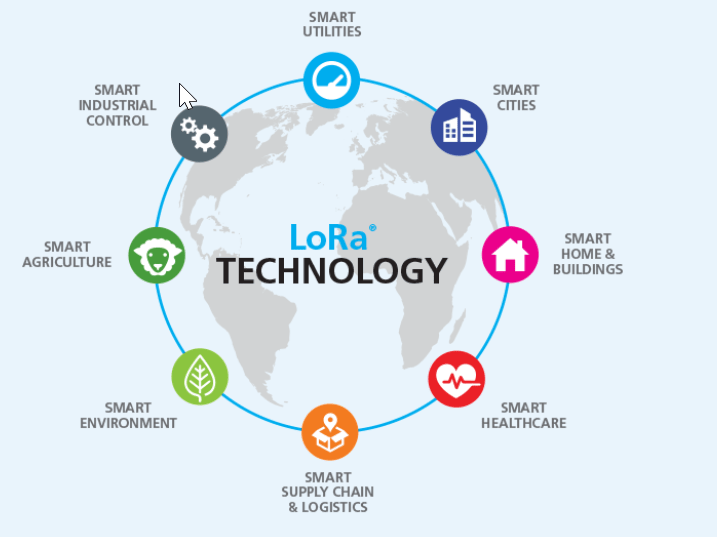
LoRa devices and networks such as the LoRaWAN® enable smart IoT applications that solve some of the biggest challenges facing our planet: energy management, natural resource reduction, pollution control, infrastructure efficiency, and disaster prevention. Semtech’s LoRa devices have amassed several hundred known use cases for smart cities, homes and buildings, communities, metering, supply chain and logistics, agriculture, and more. With hundreds of millions of devices connected to networks in more than 100 countries and growing, LoRa is creating a smarter planet.
Semtech

How does LoRa technology work?
LoRa is a wireless modulation technique developed by Semtech, which comes from Chirp Spread Spectrum (CSS) technology. Small pulses known as ‘chirp pulses’ are used to encode information via radio waves. LoRa modulated transmission can be received across a wide range of distances and is resistant to disruptions.
Applications that transmit small amounts of data at low bit rates are ideal for LoRa. Compared with technologies such as Wi-Fi, Bluetooth, and ZigBee, LoRa can support communication over much greater distances, albeit at lower data rates. These characteristics make it well suited to low-power sensors and actuators used in industrial IoT and smart factory environments.
The licence-free sub-gigahertz bands, such as 915 MHz, 868 MHz, and 433 MHz, are suitable for LoRa operation. In order to attain faster data rates than sub-gigahertz bands, it can also be operated at 2.4 GHz, although at the expense of range. These frequencies fall inside the worldwide ISM bands, which are used only for industrial, scientific, and medical applications.
From a networking standpoint, LoRa simply develops a physical layer approach to wireless transport, such as a transceiver chip. The inability to control traffic for data gathering and endpoint device management means it lacks the appropriate network protocols. This is where LoRaWAN, also known as long-range WAN, enters the picture.
What is LoRaWAN?
The LoRa Alliance created and maintains LoRaWAN, an open, cloud-based standard that facilitates wireless device communication. In essence, LoRaWAN combines networking with LoRa wireless technology and adds security features like node authentication and data encryption. Its purpose is to wirelessly link portable electronic devices to the internet in local, regional, and international networks.
The LoRaWAN specification is a standard that, most crucially, enables smooth integration between devices made by different manufacturers. The adoption of LoRa technology in the IoT sector has accelerated in part due to this one cause.
LoRaWAN has developed into a truly global connectivity ecosystem. According to the LoRa Alliance, the organisation now includes more than 360 member companies worldwide and supports over 625 certified devices, demonstrating the maturity of the technology and the breadth of solutions available for IoT deployments. This extensive ecosystem has helped drive LoRaWAN adoption across sectors ranging from manufacturing and utilities to smart buildings, agriculture, and critical infrastructure.
So, how does LoRaWAN work?
The LoRaWAN architecture consists of four main parts:
- End Nodes
- Gateways
- Network Server
- Application Server
End nodes
End nodes are devices which are located at the edge of the network. They often have sensors installed to periodically gather and monitor data. Typically, they take the shape of a low-power microcontroller that can be used in the field for many years without requiring any maintenance and is outfitted with a low-power LoRa transmitter to communicate the data packets to the gateway.
Gateways
The connection between the network and the nodes is made by LoRaWAN Gateways. They use a LoRa concentrator to gather data from the end nodes and send it to the network server across the public or private network infrastructure. Since packet forwarding is their main use, gateways are regarded as packet forwarders.
Network server
The cloud LoRa server receives data from the gateways, consolidates it, and then uploads it to the application server. The Things Network is a prime illustration of a network server (TTN).
Application server
You can use the application server to visually or analytically interpret the data. Additionally, you may incorporate the data points into a platform to take an action, such as turning on rainwater pumps for agricultural settings or opening windows in greenhouses to maintain a specific humidity level. Even notification services can be set up to alert engineers when a possible problem might arise.
Why do smart factories need LoRa?
Smart factories focus on a data-driven approach to manage their facilities, improve processes and to spot any issues that may occur. It does this through interconnected networks of machines, devices and communication tools. LoRa and LoRaWAN can help smart factories become more efficient and productive thanks to their long range, low-power usage. Take a look below at a few of the many ways LoRa can improve and streamline everyday working processes:
Asset and facility monitoring
The use of telemetry and geolocation data in an industrial IoT solution provides a clear picture of how assets are working. For IT and operational technology environments, sensors improve insight into physical spaces. To increase operational effectiveness, reduce theft, and optimise logistics, geolocation data can be used to track and monitor assets and their locations.
Environmental monitoring
Temperature and humidity, closed/open door status, illumination levels, and occupancy can all be measured with LoRaWAN sensors. Private data is recovered using the LoRaWAN network and delivered to a SCADA system for visualisation and archiving.
Factory automation
Connecting Modbus data to a private LoRaWAN network will allow you to retrieve data from remote assets using intelligent sensors that may be kilometres away through solid obstacles like buildings, walls, and other solid objects. Eliminate manual data recovery methods and expensive cabling that frequently bring flaws into systems.
Smart industrial management
Sensors can be used to remotely monitor equipment and vehicles to manage resources. This includes electrical current testing, temperature readings, water meters, steam traps of heavy equipment like forklifts, trucks, diesel tankers and backhoes and concrete mixers.
Co2 level monitoring
Using LoRaWAN and LoRa-based CO2 sensors deployed in office buildings and workspaces, you can monitor ventilation, ensure there is sufficient natural light, manage noise levels, and enhance other elements of employee wellbeing.
Benefits of LoRa technology for smart factories
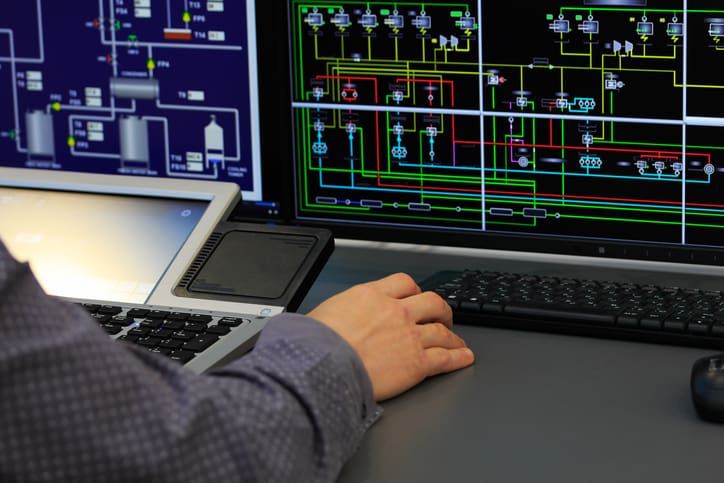
Different priorities are needed for each smart factory and smart manufacturing plant. As a result, the LoRa solution may be expanded to meet the requirements of various projects with the following advantages:
- Increased operational efficiency
- Lower energy consumption
- Reduced operational costs
- Long-range wireless communication
- Low power consumption for connected devices
- Predictive maintenance through real-time monitoring
- Early detection of equipment faults and risks
- Improved asset tracking and visibility
- Remote device configuration and management
- Scalability for large industrial IoT deployments
Advantages of using LoRaWAN for smart factories
- Long-range connectivity
- Low power consumption
- Low deployment costs
- Remote configuration and management
- Scalable network architecture
- Wireless data collection without complex wiring
Recommended LoRa products

- RS Stock No. 287-6468
- Mfr. Part No. 114992549
Each
£19.52

- RS Stock No. 238-5393
- Mfr. Part No. 102991155
Each
£304.63

- RS Stock No. 287-6612
- Mfr. Part No. 317990687
Each
£7.11
FAQs

Jack is an SEO Content Specialist at RS. He studied Journalism at University of Central Lancashire, specialising in Print Journalism. During the course he gained experience in working for major national organisations, such as The Independent and BBC. His interests include digitalisation and technology trends. In his spare time, Jack likes to play football, learn languages and attend live music events.