- Justyna Matuszak
- Published 8 Sept 2026
- Last Modified 23 Oct 2026
- 6 min

Green Buildings Solutions for A Sustainable Future


Sustainable buildings reduce energy and water use and are a crucial component of urban planning that aims to mitigate climate change.
With the growing popularity of more sustainable energy sources, the real estate industry is also shifting to "greener" solutions. Architecture and engineering firms are quickly adopting more environmentally friendly solutions for building design as a standard practice, focusing on sustainable building designs and green building construction.
Green Buildings Market
As many people ask if green buildings are really green, a simple definition of a "green building" refers to a building that minimises or eliminates harmful effects on climate and the natural environment through its design, construction or operation. Green constructions protect priceless natural resources and improve people's living standards.
As the building sector is one of the largest energy consumers in the EU, green buildings - the alternative to buildings that run on fossil fuel energy or poorly insulated ones - are becoming the norm. Consequently, the European Commission has announced a Renovation Wave to reduce energy usage and improve the performance of buildings across the EU by planning to renovate 35 million buildings by 2030, which could create 160,000 new 'green jobs' in the construction sector.
The global green building materials market size reached £260 billion in 2023. Looking forward, IMARC Group expects the market to reach £537.3 billion by 2032, exhibiting a growth rate (CAGR) of 8.18% from 2024-2032. Growing environmental awareness among the population, rising construction of various smart cities around the world, and increasing awareness about the importance of maintaining indoor air quality are some of the major factors propelling the market.
Green Building Materials Market Report by Application (Insulation, Roofing, Framing, Interior Finishing, Exterior Siding, and Others), and Region 2024-2032, Market Research Report
How Can Smart Buildings Be the Future of Sustainability?
Green buildings are a key focus for industries seeking to reduce the environmental impact of the real estate sector. Companies have to focus on alternative, recyclable and renewable materials, reducing energy consumption and waste in the construction process so that the building has a reduced impact on the environment over its lifespan, aligning with sustainable building certification standards.
Green buildings address ecological, social and economic challenges through sustainable construction practices. 'Smart buildings' that integrate building technology systems support green buildings with leveraged data and digital technology. Schneider Electric focuses on technology by implementing IoT-based metering systems, optimisation and automation from monitoring and maintenance through improvement.
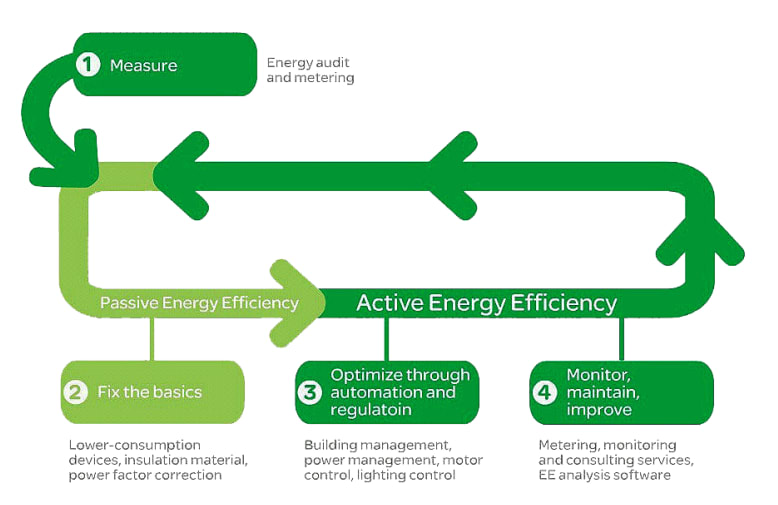
Renovation Rate & Electrification
Buildings are being transformed into ecosystems, creating more energy through solar panel generation, linking to the grid for electric vehicle charging, and having superior energy storage. Electrical systems are the core of the energy efficiency of buildings. Electrification is not only vital for the improvement of buildings but also for other sectors, such as transport, production, energy storage, and to support other renewable energy sources, like alternatives for heating, photovoltaic (PV) systems, microgrids, hydropower plants, and water energy.
Also, designs are crucial in greener infrastructure, considering the large number of existing building stock worldwide that could be renovated. Properly designed structural solutions enable the retrofitting and sustainable renovation of existing buildings, improving their overall performance. Then, making newly constructed and renovated buildings more comfortable and cost-effective to maintain is key, as well as teaching building users to be efficient. Implementing green building design and green building solutions can significantly enhance these efforts.
Transforming existing buildings into more sustainable ones requires:
- Innovative approach towards energy: minimises energy usage and, after maximising inherent and natural efficiencies in the architecture of the building, integrating renewable and low-carbon technology to meet the energy needs of the building is essential for energy conservation.
- Preserving the environment: advantage of preserving nature, diverse wildlife and land quality; constructing on contaminated land after remediation or establishing new green areas.
- Minimise waste: some activities focus on using organic and inorganic solid waste for more beneficial applications like composting and electricity generation, as well as recycling and reusing wastewater with the proper treatment, which are key aspects of sustainable waste management.
- Promoting wellbeing and health: bringing fresh air and delivering good indoor air quality; avoiding harmful substances and chemicals; ensuring the comfort of living through environments and the right temperature (monitoring systems, passive design, building management); incorporating natural light; reducing light energy needs are all part of sustainable building materials and green building strategies.
- Connecting people and infrastructures: establishing a variety of surroundings that strengthen and connect communities; providing good transport and facilities; developing "smart" and information communications technology to interact with the environment more effectively (e.g. smart electrical grids); bringing agriculture into cities.
- Building robust buildings: adapting to changing climate; assuring adaptability to disasters like fires, earthquakes, and flooding so that these structures endure and keep people and their possessions secure.
- Considering all stages of a building's life cycle: lower environmental impact from conception, construction, operation, and upkeep to eventual demolition.
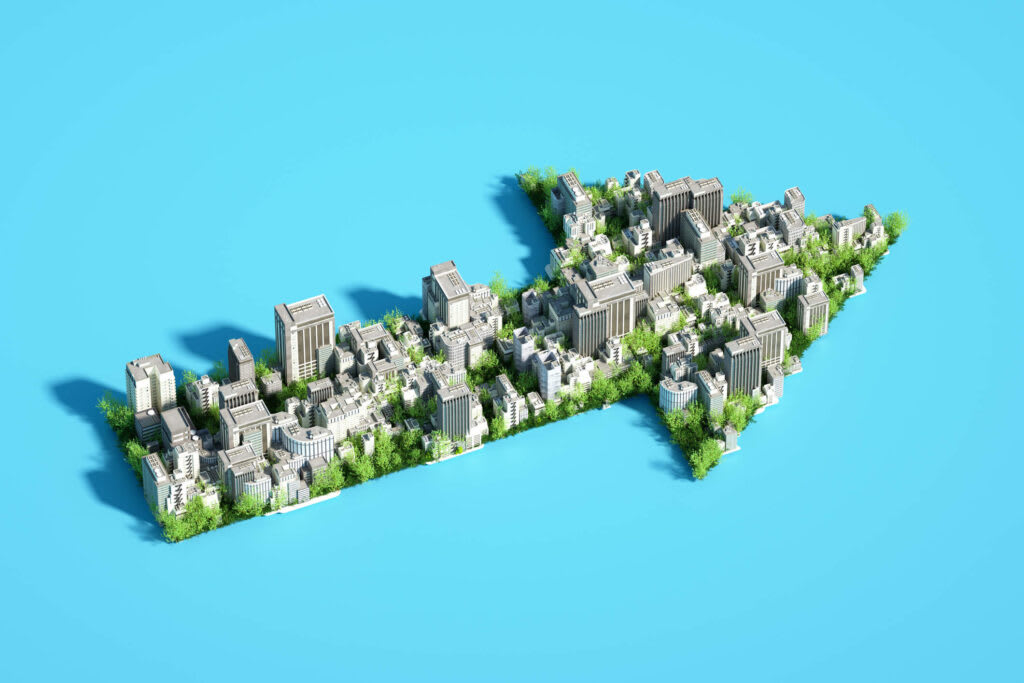
Digitalisation of Buildings
Technology, together with electrification, plays an important role in the green transition, not only for the construction industry but also for transport (electric vehicles), manufacturing and production ( sustainable automation), agriculture and other sectors.
Green technological solutions highlighted by Deloitte:
- 3D printing (Construction 4.0) and environmentally friendly architecture
- Growing utilisation of automation and robotics.
- Construction that is industrialised, modular and prefabricated.
- Digital Twin in advanced building methods.
- Building Information Modelling (BIM).
- The use of advanced analytics, data, and AI on-site project management.
The digitalisation of buildings improves energy efficiency and reduces the costs of buildings and construction, especially if integrated with IoT technologies.
Greener Solutions from Electrical Designers
Electrical design engineers have many standards and technologies to specify future-proof electrical systems for buildings. Schneider Electric acknowledges that it is the responsibility of electrical designers to implement energy-efficient and financially-optimised electrical systems. The brand considers how governments, industry-based organisations, and local electric utility companies choose to regulate green building practices in important global markets.
Software
Schneider Electric offers many software applications that help engineers with the electrical distribution system. For example, EcoStruxure enables engineers to more easily integrate energy-efficient design into their workflow compliant with the IEC 60364 standard.
Energy Metering & Power Monitoring
Efficient energy monitoring can provide essential information on how a building is operating. It indicates environmental parameters (carbon dioxide, ventilation rates, air temperature, illuminance levels, Volatile Organic Compounds) and utility sub-metering parameters (gas, water, cooling, heat for heating energy and hot water, power and lighting).
Recommended Products from Schneider Electric
Schneider Electric offers products that are trustworthy, safe and environmentally friendly. The brand rigorously tests each product in laboratories following the strictest standards, such as IEC, MID, UL, etc. Its basic energy meters comply with single-phase or three-phase circuits, simple kWh meters, fully-featured dual tariff energy meters, and power metering for network monitoring applications. Data can be viewed locally or remotely.

- RS Stock No. 791-3293
- Mfr. Part No. A9F54110
Each
£26.13

- RS Stock No. 655-452
- Mfr. Part No. A9Y6E640
Each
£398.62

- RS Stock No. 806-6803
- Mfr. Part No. TM221CE40R
Each
£485.38

- RS Stock No. 654-661
- Mfr. Part No. R9F23316
Each
£60.08
RS is aware of the critical role that sustainable practices will have in expanding greener building solutions and creating a better environment. We are dedicated to enlightening and motivating our community to make more ecologically friendly decisions. For more green solutions, click the button below to find more sustainable and green products, or alternatively, read more of our articles on sustainability.

Justyna is a Digital Content Writer at RS, responsible for writing and managing content. She studied Journalism and Social Communication with a specialisation in social media and e-PR. In that time, she participated in journalist internships in Wroclaw (PL) and London. She is passionate about tech innovations, the shift to a digital world and the impact technology has on our lives. Her interests are sport, music and film photography.