- Published 8 Sept 2026
- Last Modified 8 Sept 2026
- 5 min
Will Solar Panels Get Better At Capturing Sunlight?


In recent years, the world has witnessed a remarkable shift towards renewable energy sources, with solar power emerging as a frontrunner in the clean energy revolution.
Solar panels, which harness the sun's abundant energy, have undergone significant advancements since their inception, and annual PV capacity additions increase every year. However, the question is whether solar panels will become even better at capturing sunlight. While modern silicon-based solar panels typically convert around 20% to 25% of the sunlight they receive into usable electricity, ongoing advances in photovoltaic technology continue to push efficiency levels higher.
This article delves into the world of renewable energy, in particular solar panel technology, and explores the exciting prospects for enhancing sunlight capture efficiency.
Solar power and other renewables
Solar energy is the most abundant and accessible source of renewable energy. According to Ember's Global Electricity Review 2025, solar power generated more than 2,000 TWh (terawatt hours) of electricity worldwide in 2024, accounting for 6.9% of global electricity generation. Solar was also the world's fastest-growing source of electricity for the 20th consecutive year, increasing by 29% year-on-year and adding a record 474 TWh of new generation.
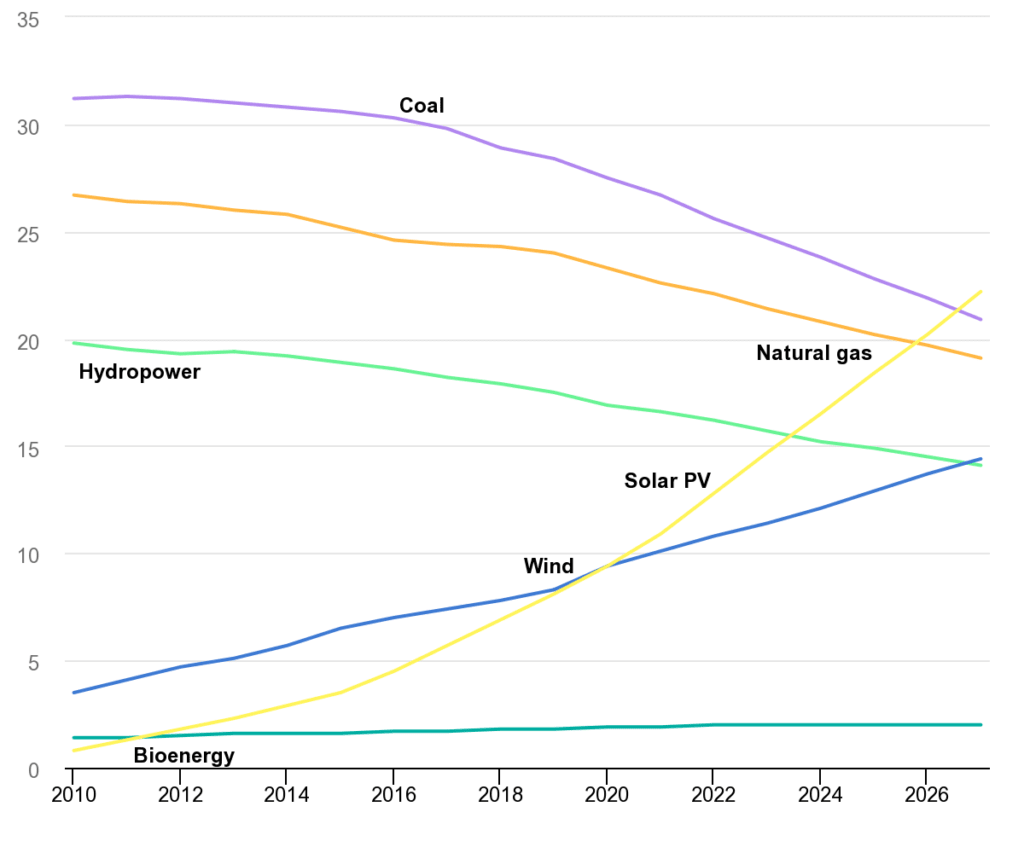
The current state of solar panel efficiency
Solar panels, also known as photovoltaic (PV) panels, have made significant strides in efficiency over the past few decades. Traditional silicon-based solar panels have reached a point of commercial viability, with many installations already dotting rooftops and landscapes around the world. The efficiency of these panels, as mentioned in the introduction, measured by their ability to convert sunlight into electricity, typically ranges from 20% to 25%.
While these numbers are impressive, the quest for improved efficiency remains ongoing. Researchers and engineers are continuously exploring innovative techniques to make solar panels even more efficient, affordable, and environmentally friendly.
Cutting-edge solar panel technologies
New designs and layers enable higher efficiency and harvesting of more energy. While solar cells made from silicon only convert a narrow frequency band of sunlight, the use of newer materials enables better absorption of the light.
Perovskite solar cells
Perovskite, a titanium and calcium crystal, is more effective at absorbing light that is closer to the infrared spectrum. These lightweight and flexible cells can be manufactured using low-cost processes, making them an attractive option for future solar panel designs.
Perovskite solar cells have the potential to produce higher efficiency than silicon-based solar cells, in fact in 2026 they sit around the 27% mark in terms of efficiency. Researchers are continuously refining perovskite formulations to enhance stability and performance, potentially pushing efficiency levels beyond the current standards.
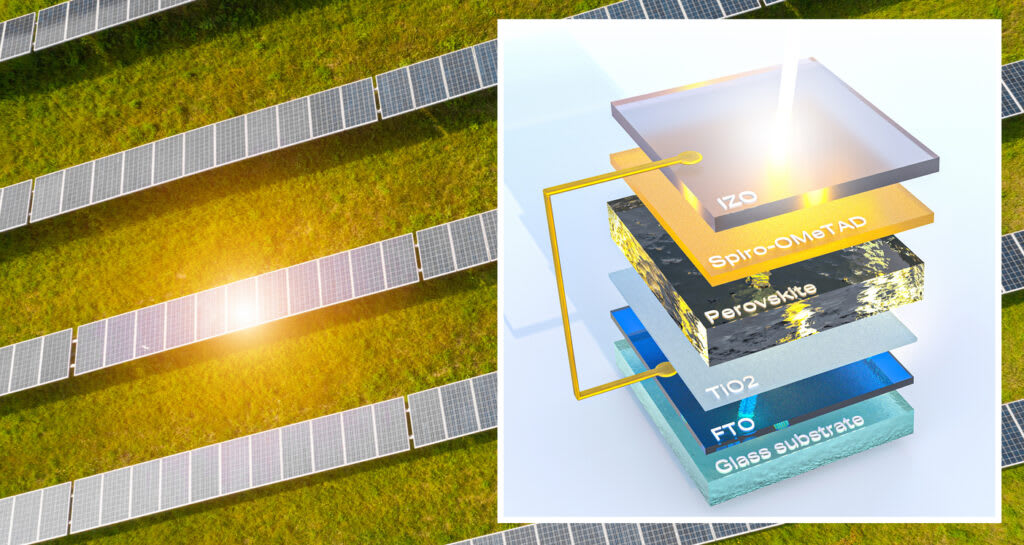
These high-efficiency results will now require further R&D to allow their scaling up onto larger surface areas and to ensure that these new cells can maintain a stable power output on our rooftops and elsewhere over a standard lifetime,
Find out more about perovskite solar cells in our article about top 5 innovative solar technologies .
Tandem solar cells
One promising avenue for increasing solar panel efficiency involves the development of tandem solar cells. These cells stack two or multiple layers of different semiconductor materials to capture a broader spectrum of sunlight. It may include a mix of currently available solar cells made of perovskites, Si, GaAs, CIGS, etc.
In 2026, tandem solar cells made from perovskite-on-silicon can promise up to 35% efficiency in laboratories, according to the 2026 Pholtovoltaics Report from Fraunhofer Institute for Solar Energy Systems ISE.
Bifacial solar panels
Photovoltaic solar cells with the ability to generate electricity when irradiated on both of their surfaces are known as bifacial solar panels. In other words, bifacial solar panels have the ability to capture sunlight from both sides, effectively utilising sunlight reflected off surfaces such as rooftops or the ground, although they function better on the ground. Some bifacial panels are capable of increasing energy production by up to 30%. The exact amount depends on the environmental surroundings.
Quantum Dots solar cells
Scientists are delving into the realm of nanotechnology by utilising semiconductor nanostructures for solar energy, creating highly-efficient solar panels with intricate nanostructures and quantum dots. A quantum dot solar cell is a solar cell that uses quantum dots to absorb the photovoltaic material.
As per National Renewable Energy Laboratory, quantum dots have the potential to dramatically (possibly even doubling it in some devices) increase the efficiency of converting sunlight into power. These structures can manipulate light at the nanoscale, allowing for better absorption and increased energy conversion efficiency. As research in this field progresses, we may witness solar panels capable of harnessing sunlight more effectively than ever before.
Conclusion
With new advanced technologies and different types of solar cells, solar power and solar panels will become more and more popular. The development of new solar panels has the ability to not only improve the efficiency of capturing sunlight but also to reshape the power industry. As the world continues its transition towards clean energy sources, the evolution of solar panels will be part of transitioning into a sustainable and energy-abundant future.