- Published 8 Sept 2026
- Last Modified 8 Sept 2026
- 8 min
Learn about Industrial Applications of 3D Printing


Learn about Industrial Applications of 3D Printing
The technology of 3D (three-dimensional) printing, sometimes referred to as additive manufacturing, has come a long way since its inception in the 1980s. Even though rapid prototyping was the original intent of 3D printing, the technology has grown in many other sectors. Automotive, architecture, engineering, construction (AEC), industrial design, education, dental, medical, military, aerospace, clothing, eyewear, art and jewellery, food, and many others use additive manufacturing technology for both prototyping and distributed manufacturing.
In this article, we'll cover some applications of 3D printing by showcasing solutions for researchers, educators and engineering students, highlighting the benefits of 3D printing and describing its most common uses.
7 Types of 3D printing technology
If you are new to the world of 3D printing technology, it is important to find out what processes and materials are available. There are various 3D printing methods used to build 3D structures and objects, and some are more popular than others.
- Stereolithography (SLA)
- Fused Deposition Modeling (FDM)
- Selective Laser Sintering (SLS)
- Digital Light Processing (DLP)
- Selective Laser Melting (SLM)
- Electron Beam Melting (EBM)
- Laminated object manufacturing (LOM)
Stereolithography
Stereolithography, or SLA, is one of the oldest processes of 3D printing, invented by Chuck Hull in 1986. It is a perfect method for mechanical engineers that want to confirm whether certain parts can fit into their design. Stereolithography is also an effective way of printing a plastic prototype.
How does an SLA printer work? SLA printers don't function like normal desktop printers. They operate with an excess of liquid plastic that forms into a solid object after hardening and forming. A stage of the printer descends into the tank by a tiny amount as the plastic hardens, and the laser creates another layer until the printing is complete. Each of these layers is created by the printer using a powerful laser that is guided by X and Y filtering mirrors, also known as galvanometers or galvo.
Fused Deposition Modeling (FDM)
Fused Deposition Modeling (FDM) is currently the most popular 3D printing technology. With this technology, you can print operational prototypes and also consumer products, such as plastic gears, whitewater canoes, lego bricks, etc.
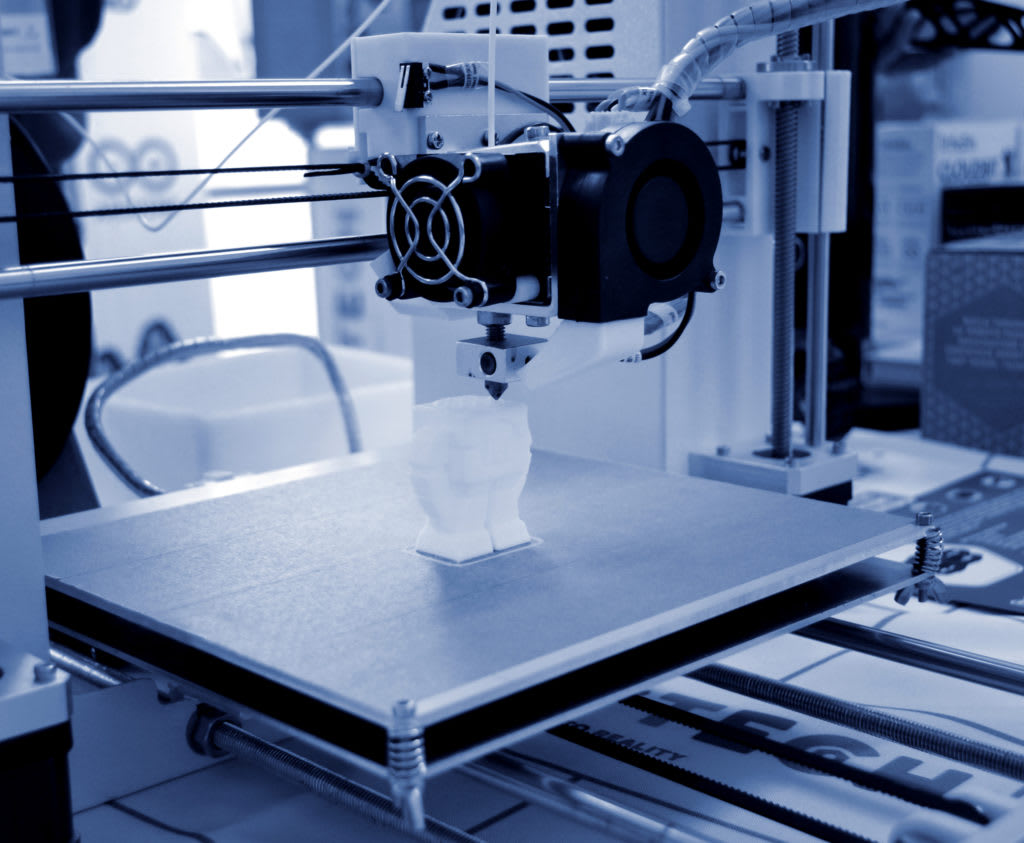
The FDM printer melts thermoplastic filaments like ABS (Acrylonitrile Butadiene Styrene) and PLA (Polylactic Acid) and applies them layer by layer to a build platform through the use of heated nozzles. Until the portion is finished, one layer is applied at a time. Besides thermoplastics, it can extrude supporting materials.
Selective Laser Sintering (SLS)
SLS is a 3D technology that sinters polymer powder particles onto a 3D model to produce a solid structure using a high-power laser. Because it offers a low cost per part and design freedom (SLS does not require support structures because unsintered powder envelops the components during printing), it is commonly used by manufacturers and engineers.
SLS 3D printers help create complex geometries that are difficult or prohibitively expensive to fabricate using traditional procedures, such as moving parts, interlocking parts, inner channel parts, and others. SLS is suitable for various applications, including bespoke, bridge, or small-batch manufacturing and SLS quick prototyping.
Digital Light Processing (DLP)
DLP is quite similar to stereolithography, but provides quicker print times than SLA. However, both DLP and SLA function with photopolymers. The digital light processing technology, utilising digital micromirror laid out on the semiconductor chip, is common in 3D printing, mobile phones and film projectors. DLP printing can be used to print incredibly detailed resin objects, including toys, jewellery moulds, dental applications, adornments, figurines, amplifiers and other objects with precise details.
Selective Laser Melting (SLM)
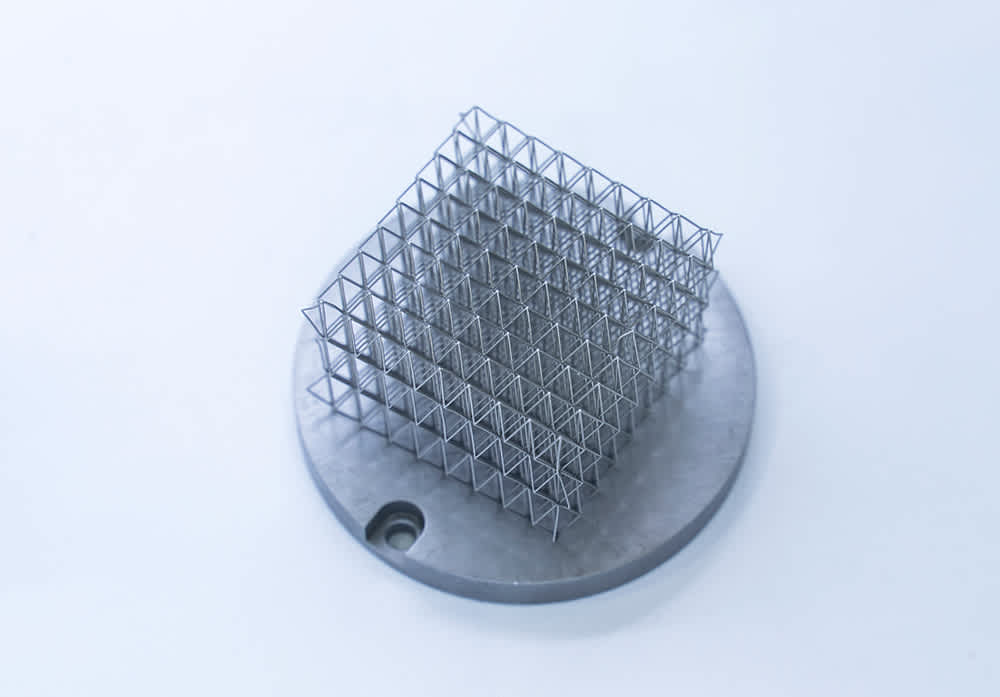
Selective Laser Melting (SLM) is a newer 3D technique developed by German scientist Wilhelm Meiners in 1995. It is a metal additive manufacturing technology that utilises a high power density laser to melt metallic fuse powders to produce near-net-shape parts fully.
Electron Beam Melting (EBM)
EBM is a type of additive manufacturing used to create metal items. It is frequently categorised as a quick production technique because of the faster printing process. Creating parts requires using an EBM in a high vacuum to melt metal powder layer by layer. The powdered metal is melted by a high-energy mean of electrons. Electron Beam Melting is similar to Selective Laser Melting as they both print from powder but EBM uses an electron beam instead of a laser.
EBM 3D printers have a powder container, a powder feeder, a powder recoater, an electron beam-emitting energy source, and a heated construction platform. It's crucial to remember that the printing procedure needs to happen in a vacuum because the electron beam would otherwise stop working if its electrons collided with gas molecules.
Laminated object manufacturing (LOM)
LOM is an inexpensive way to 3D print objects in several kinds and materials, including paper, polymer, and metal but each requires a different method to attach the sheets of material together. It is a less popular method than the ones mentioned above but should gain popularity as it is efficient, affordable and quick. How does it work? In LOM technology, the layered material is rolled on the building platform (3D printer bed). Typically, the substance has an adhesive coating that melts when the feeding roller is heated. The following layer then attaches to the preceding one.
Industrial applications of additive manufacturing
The number of organisations using 3D printing has grown significantly since its creation. Many industries are using additive manufacturing, and companies are developing new business models and opportunities.
According to Grand View Research, from 2022 to 2030, the market for 3D printing is expected to increase at a compound annual growth rate (CAGR) of 20.8% from 13.84 billion dollars in 2021. 3D printer shipments reached 2.2 million units globally in 2021, and 21.5 million units are anticipated to be supplied by 2030.
Aerospace & Defence
Aerospace & Defence (A&D) companies were one of the first to adopt additive manufacturing. A lot of key brands benefit from 3D printing, like GE, Airbus, Boeing and Safran, as the main benefit of this technology in the aerospace industry is weight reduction, which has a major positive impact on payload, fuel efficiency, and carbon dioxide emissions.
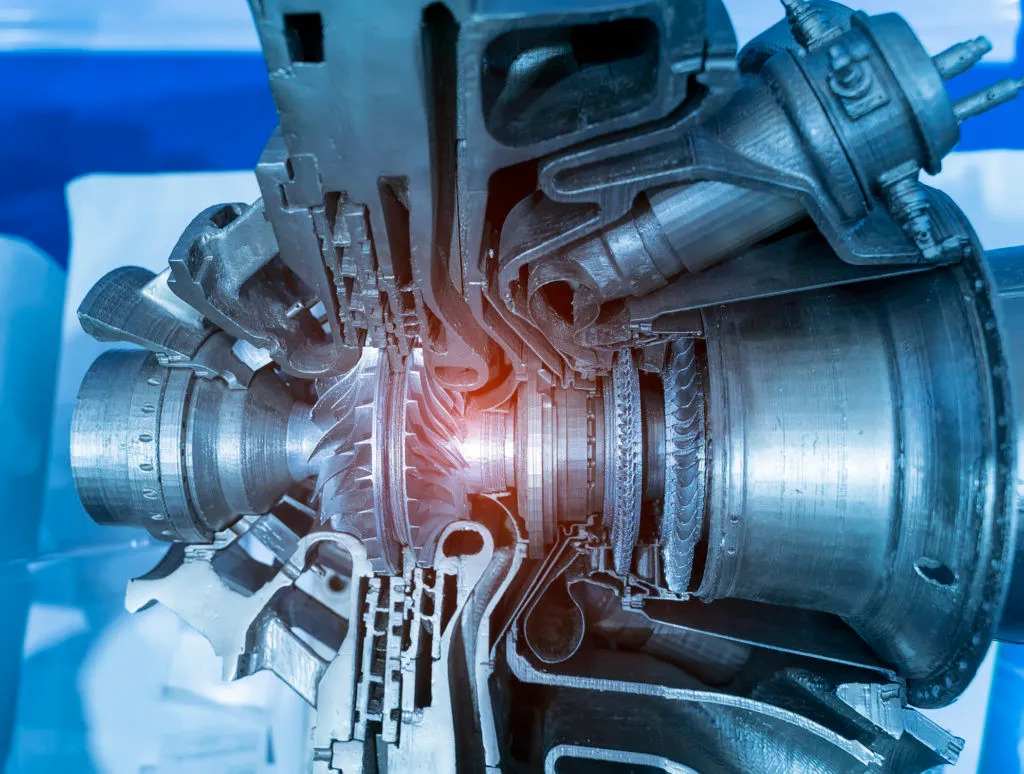
Designers can create robust material and consolidated components, which is especially important in the aerospace industry. 3D printing enables the design of useful parts for aeroplanes, such as wall panels, air ducts, and structural metal components.
The military benefits from drones, and every component of the drone's assembly, with the exception of the electronic parts, can be 3D printed. The 3D models creating technology makes it simple to produce accessories like cases, covers, mounts, and boosters that make proper drone storage possible. Furthermore, metal 3D printing is used to repair aerospace and military equipment.
Automotive
The automotive industry needs lightweight components and resistance to harsh environments to improve the drive comfort and ensure the vehicles survive different environmental conditions. For example Porsche designed an innovative 3D-printing technology for bucket seats, allowing customers to choose between three firmness levels for the comfort layer during drive. Besides the ergonomic fit, the seats offer lower weight, unique design, improved comfort and passive climate control, as the ‘3D-printed bodyform full-bucket seat’ is based on lightweight construction.

Additive manufacturing offers a large range of robust, high-temperature materials, methods, and the capacity to construct extremely complicated shapes. Organisations use it for testing multiple design options and to produce customised parts.
Healthcare & Medical
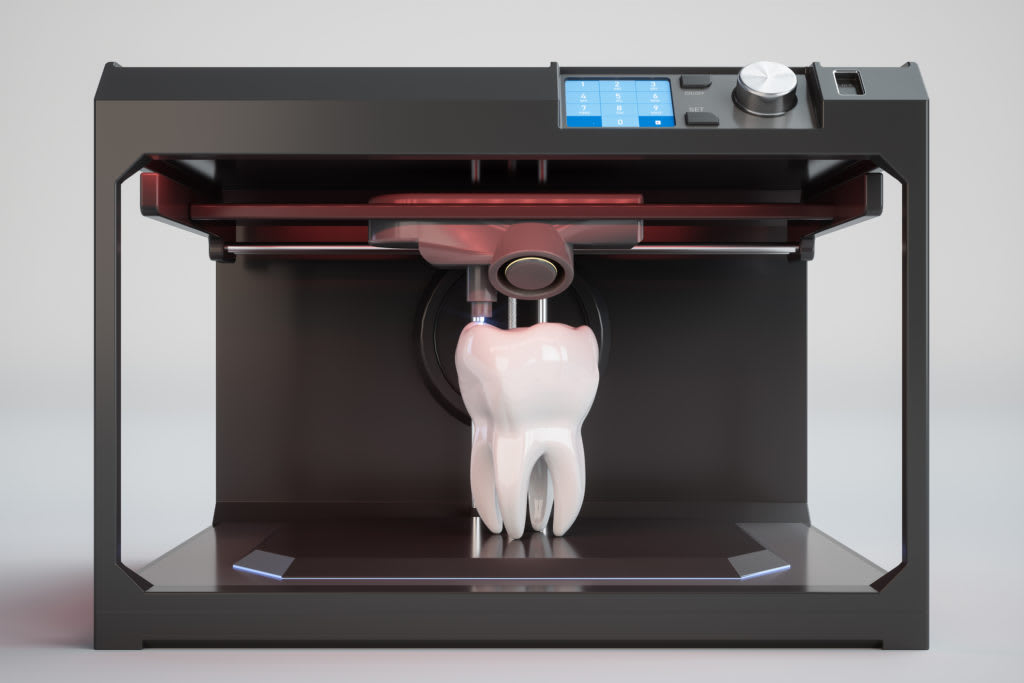
3D printing is very commonly used in medical and dental applications, such as bioprinting tissues and organs, anatomical models for surgical preparation and in dentistry, arch or crown and bridge models. Medical manufacturers are using a variety of rigid, flexible, opaque, and transparent 3D printing materials to create designs that are more customisable than ever before. Implants and dental appliances can be made using 3D printing according to patient-specific needs.
However, while human parts cannot currently be printed in 3D, artificial living tissues that resemble real tissues can be made using 3D printing technology. According to Nature Biotechnology, advances, such as 3D bioprinting, have made it possible to create intricate, 3D functioning living tissues using biocompatible materials, cells, and auxiliary components. This means that structures like bones, skin or organs can be fabricated by 3D bioprinting.
Consumer Goods
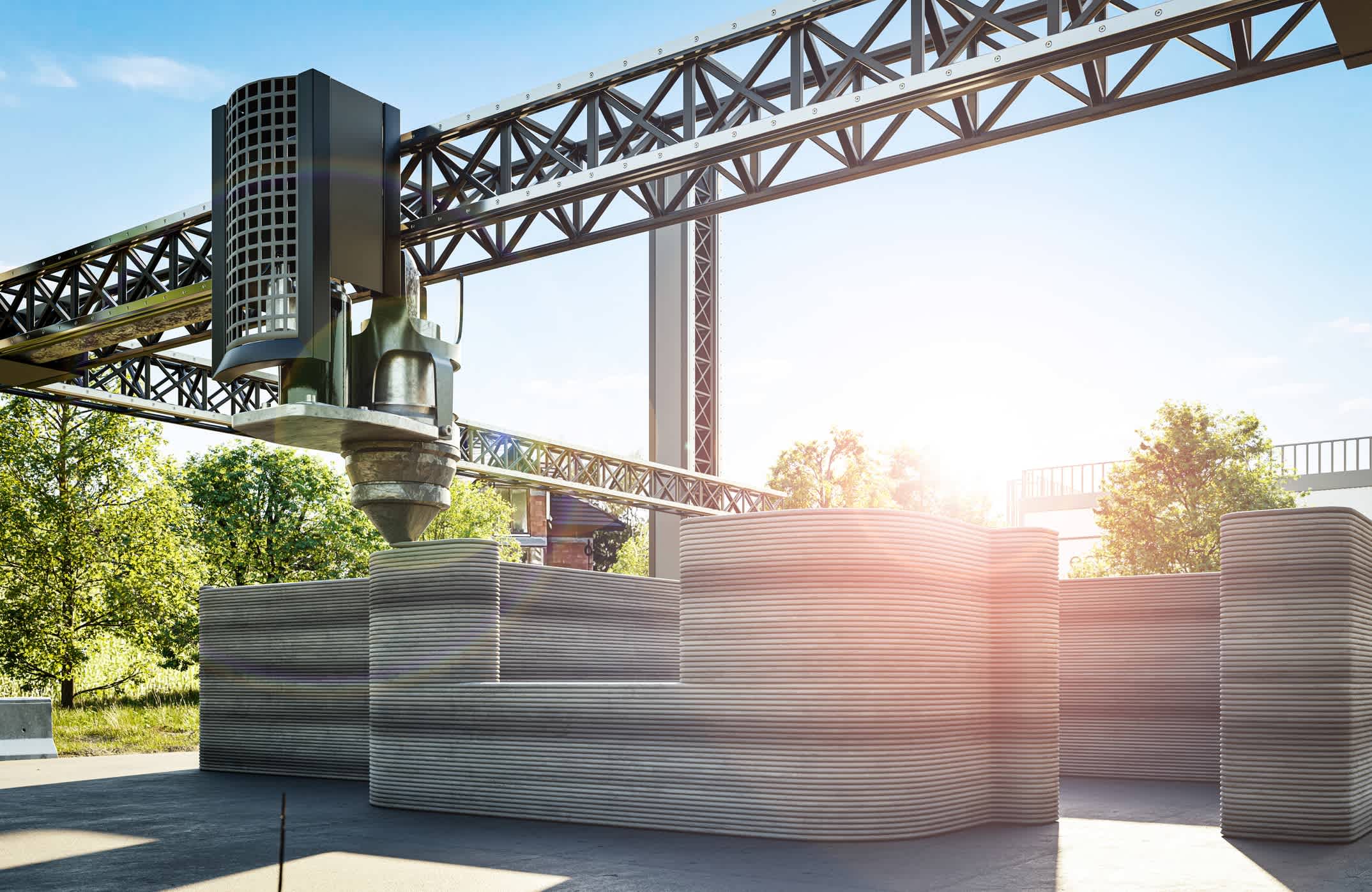
The consumer products sector has long recognised the advantages of 3D printing in product design and development. Some of these applications are for sports, leisure and lifestyle goods, such as footwear and eyewear. Others are little items like jewellery, toys, and fixes for just about anything that breaks; it's also being used to build houses and cars in an economical and sustainable manner, as designing homes on a computer using a 3D printer will allow for knowing the exact number of materials needed to construct a house.
Other applications
It is difficult to describe all of the applications of 3D printing. We highlighted only a few, but it is worth mentioning its usage in advanced technology, such as LiDAR, GIS and AI.
For example, 3D printing and geographic information systems (GIS) can enhance visual capabilities for instructional purposes. It is a tool or system that displays and analyses data related to positions on the Earth’s surface. It is a base of map-navigation applications (3D mapping) that helps users determine their location. 3D mapping technology uses machine learning algorithms to profile items and produce a three-dimensional model of them that can be mapped onto the real environment.
3D scanning is now present in smartphones too. LIDAR, a remote sensing technique used to examine the surface of Earth, makes it possible for mobile devices to run augmented reality (AR) apps with considerably higher accuracy. Thanks to LiDAR's implementation in smartphones, a customer using an augmented reality interior designing app can visualise and ‘position’ furniture inside the camera’s field of view so they know how the furniture will look in their home (see a picture below).

Benefits of 3D printing
3D printing allows users to test and visualise a concept before the actual implementation. Therefore, the main advantage is that consumers can design most goods on computers and ‘manufacture’ them at home. However, there are multiple benefits to 3D printing.
The greatest advantages of 3D printing:
- Reduces costs and production time
- Minimises waste
- Reduces errors
- Advances healthcare
- Produces complex parts of advanced materials
- Ease of access
- Flexible design
- Print on demand
- Environmentally-friendly
3D printing as an innovative technology
More and more companies are embracing the 3D printing process as it is a big competitor for traditional manufacturing methods. Some argue if additive manufacturing will eventually replace traditional techniques. Undeniably, it is starting to be utilised by almost every industry. Especially with the focus on smarter solutions and digital manufacturing, the awareness of 3D printing technology will only rise.
Recommended Products


Related Articles
Additive Manufacturing of Electronics with Voltera
Discover how additive manufacturing opens up a whole new world for electronics, enabling the design of things that were not possible before.
Read more
The Rise of 3D Printed Houses: Changing The Future of Housing
Amidst the global housing crisis emerges an innovative solution for future living. 3D printed houses could be the new norm over the next decade.
Read more